Wriai vs KoalaWriter: AI SEO Agent vs AI Article Writer

When evaluating modern search engine optimization stacks, distinguishing between content generation utilities and end-to-end automation systems is critical for scaling organic growth. As search engines increasingly reward topical depth, automated technical maintenance, and structured E-E-A-T signals, digital publishers face a fundamental architectural choice. This comprehensive analysis evaluates Wriai and KoalaWriter, examining how an autonomous AI SEO agent diverges fundamentally from a specialized AI article writer in operational scope, workflow execution, and long-term search performance.
Architectural Foundations: Autonomous Agents Versus Content Generation Tools
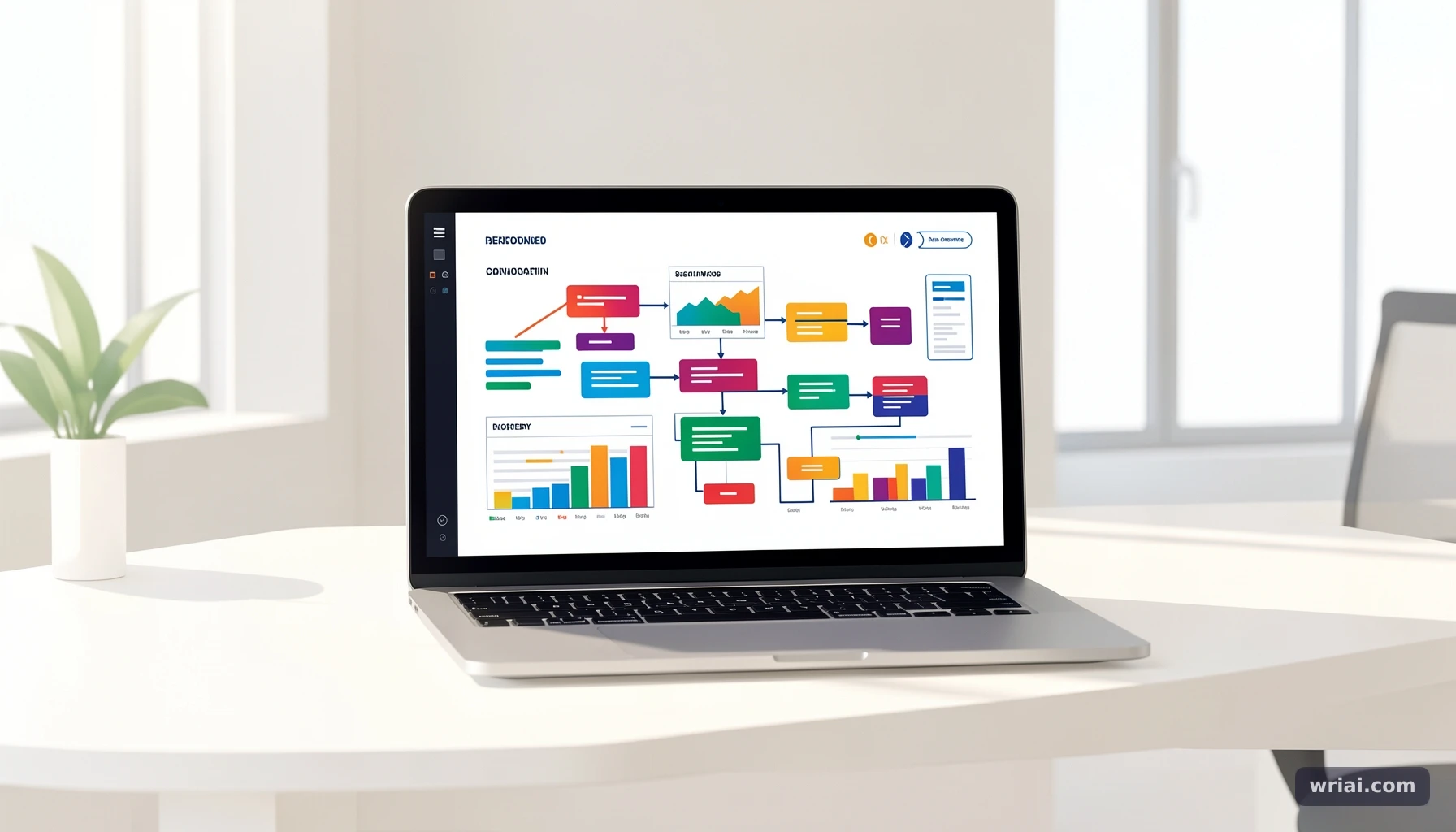 Wriai vs KoalaWriter: AI SEO Agent vs AI Article Writer - Architectural Foundations: Autonomous Agents Versus Content Generation Tools
Understanding the structural differences between Wriai and KoalaWriter requires examining their core engineering philosophies. Wriai operates as an autonomous AI SEO automation and content lifecycle management platform designed to execute closed-loop search workflows, a distinction explored further in the Wriai vs Rankability comparison. Rather than treating content creation as an isolated task, Wriai functions as a digital agent capable of identifying search gaps, generating optimized clusters, publishing directly to content management systems, handling internal linking, submitting URLs for indexing, distributing content socially, and continuously monitoring for content decay.
Conversely, KoalaWriter functions as an advanced AI-powered content generation tool optimized for rapid, high-quality article production. It excels at producing long-form blog posts, Amazon affiliate product roundups, and real-time data-backed articles utilizing live search insights. While KoalaWriter streamlines the writing and formatting phase, it relies heavily on manual user configuration for keyword selection, publishing triggers, and post-publication optimization, highlighting the distinction examined in Wriai vs Clearscope. For site owners exploring broader ecosystem alternatives, comparing platform architectures provides valuable context, as seen when reviewing Wriai Alternative solutions across the market.
The Closed-Loop Automation Paradigm of Wriai
The operational engine of Wriai revolves around a continuous feedback loop that eliminates manual bottlenecks in organic growth campaigns. Traditional SEO workflows require human operators to manually pull data from Google Search Console, perform keyword research in third-party tools, draft briefs, edit copy, publish manually, build internal links by hand, and track rankings over time. Wriai automates this entire sequence. By integrating directly with search console APIs and content management systems, the platform's autonomous agents execute scheduled optimizations, ensuring that websites remain actively managed without constant human intervention.
The On-Demand Generation Model of KoalaWriter
KoalaWriter approaches content production through a specialized, single-task generation model. Users input a target keyword or specific URL, configure tone, point of view, and article type, and the system generates a fully formatted draft backed by real-time SERP data. This architecture is engineered for speed and content quality, making it ideal for freelance writers, affiliate marketers, and small content teams who need to produce individual articles rapidly. However, the responsibility for strategy, keyword clustering, internal linking architecture, and post-publish indexing remains entirely with the human operator.
Infrastructure and Data Integration Capabilities
Data ingestion shapes the efficacy of any AI-driven search strategy. Wriai relies on deep integrations with website analytics, Google Search Console, and competitor monitoring radar systems to uncover organic ranking gaps and trigger content decay recovery protocols automatically. KoalaWriter focuses its data integration layer on real-time search engine result page scraping, DALL-E 3 image generation pipelines, and direct publishing hooks into WordPress and Shopify. These differing integration footprints reflect their respective target use cases: enterprise-grade automated site scaling versus high-efficiency artisanal content strategy, a contrast also considered in Wriai vs MarketMuse. content creation.
Comparative Workflow and Technical Specifications
Evaluating the technical mechanics of both platforms highlights how their feature sets cater to distinct operational scales. While both tools leverage advanced large language models to generate fluent, human-like text, their execution environments and workflow triggers diverge significantly. Wriai manages the entire lifecycle of a website's content footprint, whereas KoalaWriter concentrates its processing power on the creation and initial optimization phases.
| Technical Parameter / Feature | Wriai (Autonomous SEO Platform) | KoalaWriter (AI Content Generator) |
|---|---|---|
| Primary Operational Focus | End-to-end SEO automation and lifecycle management | One-click article generation and affiliate copywriting |
| Workflow Execution | Closed-loop (Discovery → Publish → Link → Recover) | On-demand user-triggered generation and editing |
| Keyword Strategy & Gap Analysis | Golden Opportunity Engine & AI Market Radar | Real-time SERP analysis per article generation |
| Publishing & Indexing | Automated CMS publishing with automated index submission | Direct publishing to WordPress and Shopify |
| Post-Publish Maintenance | Continuous performance monitoring and decay recovery | Manual performance tracking and manual updates |
| Target Infrastructure Scale | Enterprise sites, multi-site agencies, and portfolio management | Individual blogs, niche affiliate sites, and freelance work |
Workflow Discovery and Keyword Intelligence
Wriai leverages a sophisticated discovery engine known as the Golden Opportunity Engine alongside the AI Market Radar. These modules continuously scan connected search console properties and competitor landscapes to surface high-potential keywords and ranking gaps, automatically queuing them for content production. KoalaWriter approaches keyword intelligence on an ad-hoc basis, allowing users to input specific seed terms or URLs to generate real-time, data-backed articles tailored to immediate search intent without maintaining a macro-level content calendar.
Publishing, Linking, and Indexing Execution
The journey of content from draft to indexed search result highlights another major divergence. Wriai automates the entire distribution pipeline: after generating E-E-A-T compliant clusters, it publishes via native CMS integration, builds contextual internal and external links, submits URLs for rapid search engine indexing, and distributes assets across connected social channels. KoalaWriter provides robust support for direct WordPress and Shopify publishing alongside internal linking suggestions, but leaves final link placement, social amplification, and indexing verification to the user.
Maintenance and Content Decay Management
Search algorithms evolve constantly, causing established pages to experience ranking degradation over time—a phenomenon known as content decay. Wriai incorporates specialized monitoring workflows that detect declining impressions or click-through rates, automatically triggering content refresh protocols to update outdated sections and preserve organic visibility. KoalaWriter does not feature automated post-decay recovery; managing existing content freshness requires manual audits and subsequent article regeneration or editing by the site administrator.
Implementation Workflows: Setting Up Campaigns for Maximum Search Visibility
Executing a successful organic search campaign requires structured operational steps. Whether deploying an autonomous multi-site agent or configuring an on-demand content generator, establishing a clear implementation workflow ensures consistent search visibility and optimal resource allocation.
[Connect Data Sources] ──> [Identify Opportunities] ──> [Generate / Execute Content] ──> [Publish & Link] ──> [Monitor & Recover]
Step-by-Step Configuration with Wriai
- Authentication and Integration: Connect your Google Search Console property and target Content Management System (such as WordPress) to establish secure API communication.
- Opportunity Discovery: Allow the Golden Opportunity Engine to analyze existing ranking profiles, traffic data, and competitor keyword gaps to generate a prioritized content roadmap.
- Cluster Configuration: Define high-level thematic pillars and let the AI agent structure comprehensive topic clusters designed to capture long-tail and head terms.
- Autonomous Execution: Activate scheduled automated workflows where the AI researches, writes, optimizes, publishes, links, and indexes content without manual intervention.
- Lifecycle Monitoring: Monitor performance dashboards and allow the system's content decay recovery protocols to automatically refresh declining pages.
Step-by-Step Configuration with KoalaWriter
- Target Selection: Navigate to the generation dashboard and input your primary target keyword, URL, or content brief requirements.
- Configuration Settings: Select your desired article type (such as a standard blog post or an Amazon affiliate product roundup), tone of voice, point of view, and optional real-time data sources.
- Content Generation: Execute the generation sequence to compile a comprehensive, long-form draft backed by live SERP data and integrated AI image generation.
- Review and Refine: Review the generated draft within the built-in editor, adjusting formatting, verifying internal linking suggestions, and refining tone.
- Manual Deployment: Utilize direct CMS integrations to push the finalized article to WordPress or Shopify, or copy the content for manual publishing.
Strategic Optimization, Pitfall Avoidance, and Case Examples
Deploying AI-driven tools at scale requires adherence to established best practices to avoid common search penalties and maximize topical authority. Understanding how to balance automation with quality control ensures sustainable long-term growth across competitive niches.
Avoiding Thin Content and Generic Output Pitfalls
A frequent pitfall in AI content generation is the reliance on surface-level summaries that fail to demonstrate genuine experience or unique data points. When utilizing generation tools like KoalaWriter, operators must inject proprietary statistics, expert commentary, and custom formatting to satisfy modern search quality guidelines. Conversely, when deploying autonomous systems like Wriai, administrators should regularly review generated content clusters to ensure thematic cohesion and prevent automated keyword cannibalization across overlapping topic silos.
Case Example: Scaling a Multi-Niche Affiliate Portfolio
Consider a digital agency managing fifty distinct niche affiliate sites. Using a manual or semi-automated writing assistant creates severe operational bottlenecks, as a human team must coordinate keyword research, brief creation, publishing schedules, and internal linking across hundreds of monthly pages. By deploying Wriai, the agency shifts to an agentic model where autonomous loops handle discovery, drafting, internal linking, and indexing across all fifty properties simultaneously. This operational shift reduces administrative overhead by over 80% while ensuring rapid response times to emerging search trends identified by the AI Market Radar.
Enterprise Considerations and 2026 Strategic Outlook
As artificial intelligence transforms the search engine landscape, enterprise organizations and digital agencies must adapt their infrastructure to meet shifting algorithmic standards. The maturation of Generative Engine Optimization (GEO) means that simply producing large volumes of text is no longer sufficient; systems must actively manage the entire content lifecycle, ensure strict entity alignment, and maintain rapid indexing pipelines.
The Shift Toward Agentic SEO Operations
Authored by Alex Vance, current industry benchmarks emphasize a definitive migration from manual tool usage to fully autonomous agentic workflows. In 2026, successful digital growth strategies rely on software that executes tasks rather than merely offering recommendations. Platforms that orchestrate closed-loop processes—moving seamlessly from opportunity identification to post-publish maintenance—empower lean teams to achieve enterprise-level output. For professionals exploring advanced platform comparisons, reviewing detailed evaluations such as Wriai vs NeuronWriter provides deeper insights into how autonomous automation outpaces traditional optimization editors.
Future-Proofing Organic Growth Infrastructure
To maintain competitive advantage in an AI-dominated search ecosystem, organizations must prioritize systems that integrate tightly with proprietary data sources like Google Search Console. Autonomous platforms that leverage continuous feedback loops to detect search algorithm shifts and execute real-time content decay recovery will consistently outperform static publishing models. Embracing end-to-end automation allows content teams to redirect their focus toward high-level brand strategy, creative direction, and proprietary research while intelligent software manages the technical complexities of organic search.
Frequently Asked Questions
What is the fundamental difference between Wriai and KoalaWriter?
Wriai is an autonomous AI SEO automation and content lifecycle management platform that executes closed-loop workflows from keyword discovery to publishing, internal linking, indexing, and content decay recovery. KoalaWriter is a specialized AI content generation tool designed for rapidly producing high-quality articles, product roundups, and blog posts using real-time SERP data and direct CMS publishing integrations.
How does Wriai handle content maintenance and updates?
Wriai utilizes automated monitoring systems to track organic performance and identify pages experiencing traffic decline or content decay. When performance drops are detected, the platform triggers automated recovery protocols to refresh outdated information, update internal links, and resubmit URLs for indexing without requiring manual intervention from site administrators.
Can KoalaWriter be used for automated multi-site SEO campaigns?
KoalaWriter excels at fast, on-demand content generation for individual blogs or affiliate sites through direct WordPress and Shopify integrations. While it streamlines the drafting and optimization phase for individual articles, scaling a multi-site portfolio across dozens of domains requires additional manual oversight for keyword strategy, macro-level scheduling, and post-publish maintenance.
Which platform is better suited for SEO agencies and enterprise users?
Wriai is specifically architected for SEO agencies, enterprises, and portfolio owners managing multiple sites at scale. Its agentic workflow automation, Golden Opportunity Engine, AI Market Radar, and closed-loop lifecycle management minimize manual administrative overhead, making it ideal for organizations seeking hands-off, systems-driven organic growth.
Alex Vance
Head of AI SEO & Autonomous Growth Systems
Specialist with 9+ years of experience in algorithmic search engine optimization, semantic knowledge graphs, and large-scale LLM automation.