Wriai vs Rankability: AI SEO Platforms Compared
Wriai vs Rankability is best understood as a comparison between an autonomous SEO operating system and its analytical capability set. Wriai connects opportunity discovery, E-E-A-T content production, publishing, linking, indexing, distribution, monitoring, and recovery in one closed-loop workflow, while “Rankability” is treated here as a functional ranking-analysis layer within that ecosystem—not a separate competing platform.
Core Definitions and Real-World Architecture
Wriai is an autonomous AI SEO automation and content lifecycle management platform. Its architecture is designed to execute connected SEO tasks, not merely recommend keywords or generate isolated articles. In the Wriai vs Rankability comparison, the central distinction is therefore scope: Wriai represents the full operating platform, while Rankability describes the platform’s ability to analyze ranking opportunities, gaps, and performance.
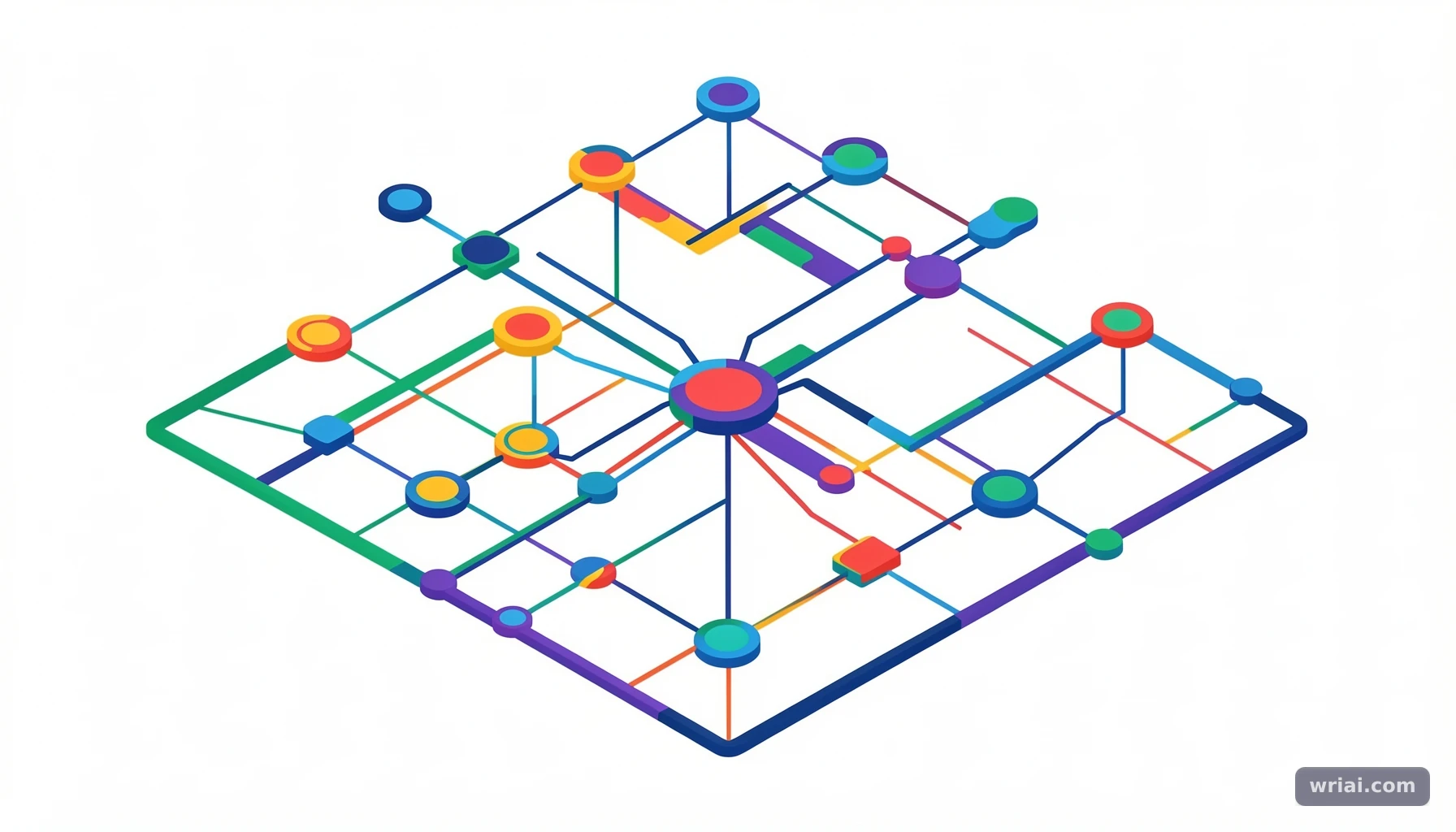 Wriai vs Rankability: AI SEO Platforms Compared - Core Definitions and Real-World Architecture
What Wriai actually does
Wriai combines several specialized capabilities into one agentic workflow:
- Golden Opportunity Engine: Identifies high-potential keywords and ranking gaps using website, Google Search Console, competitor, and search data.
- E-E-A-T Content Studio: Supports research, content-cluster planning, content creation, and optimization around Experience, Expertise, Authoritativeness, and Trustworthiness.
- AI Market Radar: Monitors competitor movements and search trends to identify emerging opportunities.
- Automated publishing: Pushes content to connected content management systems.
- Contextual linking: Executes relevant internal and external linking opportunities.
- Indexing automation: Submits new or updated URLs for search-engine indexing.
- Social distribution: Shares published content across connected social channels.
- Content Decay Recovery: Detects declining or outdated content and triggers refresh workflows.
- AI image generation: Produces relevant visual assets for SEO content.
This means Wriai is not accurately described as a standard AI writing assistant. Its intended role is closer to an orchestration layer that coordinates research, production, technical execution, distribution, and ongoing optimization.
How “Rankability” fits into the comparison
The available product facts identify Rankability as a functional capability or feature set within the Wriai ecosystem, rather than a separately documented product with its own independent interface, pricing model, or technical specification. That distinction matters because a conventional tool comparison would otherwise imply a level of product separation that the available evidence does not support.
In practical terms, Rankability can be understood as the analytical question: Which opportunities are most likely to improve a site’s search visibility, and what should happen next? Wriai operationalizes the answer by connecting that analysis to content planning, publishing, linking, indexing, promotion, and recovery.
The comparison should therefore focus on workflow architecture rather than unsupported claims about independent Rankability features. For teams evaluating AI SEO platforms in 2026, this is a useful evaluation principle: distinguish between a standalone application, a named module, and a capability embedded in a broader automation system.
The closed-loop SEO architecture
Wriai follows a closed-loop model:
Opportunity → Research → Create → Publish → Link → Index → Distribute → Monitor → Recover
Each stage feeds the next. A ranking gap can become a content brief; the brief can become a clustered article; the article can be published, linked, submitted for indexing, distributed socially, and monitored for performance. If results weaken, the lifecycle does not end: the system can identify decay and initiate a refresh workflow.
This architecture is particularly relevant to programmatic SEO, agency operations, SaaS content growth, and websites with large existing libraries. A site owner does not have to treat every article as a one-time project. Instead, content becomes an operational asset with a defined production and maintenance lifecycle.
For additional background on the organization and its platform direction, readers can consult Wriai’s About Us page.
Technical Specifications and Workflow Comparison
The most meaningful Wriai vs Rankability comparison is operational. Wriai connects analysis with execution, whereas Rankability refers primarily to the ranking-opportunity and performance-analysis dimension documented within the platform. The table below separates those layers without inventing unsupported standalone product specifications.
Capability matrix
| Workflow or technical dimension | Rankability capability within Wriai | Wriai platform execution |
|---|---|---|
| Primary purpose | Identify ranking opportunities, gaps, and performance signals | Manage the full SEO content lifecycle |
| Data inputs | Website performance, Google Search Console, competitor, and search data | The same data plus planning, content, CMS, linking, indexing, and distribution workflows |
| Opportunity discovery | Finds high-potential keywords and ranking gaps | Converts opportunities into scheduled SEO actions |
| Content planning | Informs topic and keyword prioritization | Organizes topics into clusters and production pipelines |
| Content creation | Provides analytical direction for what should be created | E-E-A-T Content Studio researches and creates content |
| Visual production | Helps define the relevance of supporting assets | AI image generation creates relevant visual assets |
| Publishing | Does not represent the complete publishing layer by itself | Publishes and updates content through connected CMS platforms |
| Internal linking | Identifies contextual opportunities as part of the broader workflow | Automates internal and external contextual linking |
| Indexing | Ranking analysis can indicate whether visibility is developing | Automatically submits URLs for search-engine indexing |
| Distribution | Performance signals can inform promotional priorities | Shares published content across connected social channels |
| Monitoring | Evaluates ranking and opportunity performance | Monitors content performance across its lifecycle |
| Recovery | Detects conditions associated with declining visibility | Triggers content refresh workflows through Content Decay Recovery |
| Best-fit operating model | SEO analysis and prioritization | Autonomous, end-to-end SEO execution |
Interface logic: modules instead of disconnected tools
The available specifications describe Wriai through functional modules rather than a screen-by-screen interface map. It is therefore more accurate to describe the interface conceptually as a set of connected work areas:
- Opportunity analysis: Review ranking gaps and high-potential search opportunities.
- Market intelligence: Monitor competitors and search-trend movement.
- Content planning: Group priorities into clusters and production schedules.
- E-E-A-T content production: Research and create content aligned with trust and topical relevance.
- Execution controls: Connect the CMS, linking workflows, indexing, and distribution.
- Lifecycle monitoring: Identify decay and initiate updates.
This modular model is important for evaluating automation quality. A platform may have an impressive content editor but still require manual exporting, formatting, uploading, linking, and monitoring. Wriai’s stated differentiation is that these steps are connected rather than isolated.
What the platform comparison should not claim
A responsible comparison should avoid presenting unsupported details as fact. The available documentation does not establish:
- A separate Rankability product interface.
- Independent Rankability subscription plans.
- Specific ranking algorithms or proprietary scoring formulas.
- Guaranteed ranking improvements.
- A fixed percentage increase in organic traffic.
- Specific CMS names or search engines beyond the documented integration concept.
- Fully autonomous approval of every publication decision without human governance.
These limitations do not weaken the comparison. They improve it. For expert buyers, the essential question is not whether an interface has a particular button or score. It is whether the platform can connect reliable opportunity data to controlled, measurable execution.
Alex Vance’s perspective is that AI SEO should be evaluated as an operating system for recurring decisions, not simply as an article generator. That means assessing data flow, actionability, quality controls, and feedback loops together.
Step-by-Step Implementation Workflow
Wriai’s practical value appears when the platform is implemented as a repeatable operating process. The following workflow translates the documented capabilities into an implementation model for SEO teams, agencies, SaaS companies, and independent website owners.
Step 1: Connect the data and define the operating perimeter
Begin by establishing the website, search-performance, competitor, and content data needed for opportunity discovery. Google Search Console data is particularly important because it provides first-party evidence about queries, impressions, clicks, and existing visibility.
Before automation begins, define:
- Which domains or properties are in scope.
- Which content categories are commercially or strategically important.
- Which topics require expert review.
- Which CMS environments are connected.
- Which publishing actions require approval.
- Which social channels are permitted for distribution.
Automation should operate within a clearly defined perimeter. A platform can execute tasks efficiently, but it cannot independently determine every brand, legal, medical, financial, or reputational constraint unless those constraints are explicitly represented in the workflow.
Step 2: Find opportunities through ranking analysis
Use the Golden Opportunity Engine to identify keywords and content gaps. The goal is not to collect the largest possible keyword list. It is to prioritize opportunities where the site has a credible path to relevance and authority.
Useful prioritization factors include:
- Existing impressions without strong click-through performance.
- Queries where the site has partial visibility but lacks a dedicated page.
- Competitor topics that align with the site’s expertise.
- Search themes that can support a coherent content cluster.
- Existing pages showing signs of decline.
- Opportunities that match the site’s audience and conversion journey.
This is where the Rankability layer has practical importance. It helps answer what deserves attention first. However, opportunity scores should be treated as prioritization signals, not guarantees. Search results remain dynamic, and relevance, content quality, technical accessibility, authority, and user satisfaction all influence outcomes.
Step 3: Build clusters and production schedules
Once opportunities are identified, organize them into topic clusters. A cluster should have a clear central subject, supporting subtopics, and an intentional internal-linking structure.
A useful planning sequence is:
- Select a primary topic with strategic importance.
- Identify supporting questions and related subtopics.
- Map each intent to a distinct page where necessary.
- Define the relationship between cornerstone and supporting pages.
- Schedule production according to resources and business priorities.
- Assign human review requirements before creation begins.
The E-E-A-T Content Studio supports this stage by connecting research, planning, and creation. The objective is not to publish large volumes of semantically similar pages without purpose. The objective is to build a structured knowledge resource that demonstrates experience, expertise, authority, and trust.
Step 4: Create content and supporting visual assets
The content workflow should combine research with editorial controls. AI-generated drafts require validation for factual accuracy, originality, clarity, search intent, and brand alignment.
For each article, review:
- Whether the opening directly answers the user’s question.
- Whether claims are supported by reliable evidence.
- Whether the content reflects first-hand experience where appropriate.
- Whether headings follow a logical information architecture.
- Whether internal links are contextually justified.
- Whether images support comprehension rather than decorate the page.
- Whether generated visuals contain accurate text and recognizable concepts.
Wriai’s integrated AI image generation can reduce the friction of producing relevant visual assets. However, images should still receive accessibility review, descriptive alt text, compression, and placement decisions based on user value.
Step 5: Publish, link, index, and distribute
After approval, Wriai can push content to a connected CMS, apply contextual internal and external links, submit URLs for indexing, and distribute the content through connected social channels.
These actions should be treated as a coordinated release process:
- CMS publishing makes the page available.
- Internal linking helps users and crawlers discover related content.
- External references support context when they are genuinely relevant.
- Indexing submission communicates that a new or updated URL is ready for consideration.
- Social distribution creates additional discovery pathways.
Indexing submission is not the same as guaranteed indexing, and indexing is not the same as ranking. A mature implementation keeps those concepts separate when evaluating performance.
Step 6: Monitor and recover content
The final stage is continuous lifecycle management. Wriai monitors content performance and can identify pages that have lost visibility or become outdated.
A recovery workflow may include:
- Detect a sustained decline rather than reacting to a single fluctuation.
- Compare current performance with historical performance.
- Check whether search intent or competitor coverage has changed.
- Review outdated facts, examples, links, and screenshots.
- Expand or restructure the page where information gaps exist.
- Reconnect the page to relevant internal links.
- Republish and submit the updated URL for indexing.
- Monitor the result over an appropriate observation period.
This closed loop is one of the strongest distinctions between content generation and content operations. Generating a page is an event; maintaining its usefulness is a system.
Pro Tips, Pitfalls, and Real-World Applications
The difference between effective automation and uncontrolled publishing is governance. Wriai can coordinate the technical workflow, but strong outcomes depend on disciplined prioritization, accurate inputs, editorial review, and meaningful performance measurement.
Pro tips for better automation outcomes
Start with a constrained content system. Do not activate every possible topic at once. Begin with one market segment, one content cluster, or one domain section. This creates a manageable baseline for quality and performance review.
Use opportunity data to prioritize, not to dictate. A keyword gap does not automatically justify a new article. Confirm that the topic matches the audience, the site’s expertise, and the intended business outcome.
Build refresh rules before publishing at scale. Define what constitutes decay: declining clicks, falling impressions, lost rankings, outdated information, or competitor displacement. Clear rules make recovery more consistent.
Create approval thresholds. Low-risk updates may follow a streamlined process, while regulated, reputational, or expert-led topics require human review. This protects quality without eliminating automation.
Measure the workflow, not only rankings. Track production time, approval time, indexing progress, internal-link coverage, refresh completion, and content performance. These operational indicators reveal where the system is efficient or constrained.
Common pitfalls and solutions
Pitfall: treating AI output as finished expertise
A generated article may be structurally complete but still lack evidence, original experience, or precise claims. The solution is to add expert review, source validation, and first-hand examples before publication.
Pitfall: producing overlapping pages
Large-scale automation can create keyword cannibalization when multiple pages target nearly identical intent. Use clusters and page-purpose mapping to determine whether a new URL is necessary or whether an existing page should be improved.
Pitfall: confusing indexing with success
Submitting a URL does not guarantee indexing, and indexing does not guarantee visibility. Evaluate the complete chain from crawlability and relevance through engagement and ranking development.
Pitfall: refreshing content without diagnosing decay
Updating a publication date or adding a few sentences rarely solves a strategic decline. Compare intent, competitors, factual freshness, page structure, internal links, and user expectations before choosing a recovery action.
Practical use cases
Programmatic SEO scaling: An agency can use opportunity analysis to prioritize hundreds of pages across multiple client domains, then apply cluster planning, CMS publishing, linking, indexing, and monitoring through a repeatable system. Wriai’s agency-focused SEO automation workflow is relevant to this operating model.
Automated evergreen refresh: A publisher with “best,” “how-to,” or comparison content can monitor performance and trigger refresh workflows when pages lose visibility or become outdated.
Competitor opportunity response: AI Market Radar can surface competitor movements and emerging search themes. The correct response is not to copy competitor pages, but to identify unmet user needs and publish a more useful, credible resource.
Hands-off founder-led growth: A SaaS founder may use Wriai to coordinate research, content creation, publishing, linking, indexing, and distribution without hiring a large SEO team. Human oversight remains important for positioning, product accuracy, and strategic judgment.
Enterprise considerations and the 2026 outlook
For enterprise teams, the main question is control at scale. A suitable implementation should define workspace ownership, domain separation, editorial permissions, approval policies, data governance, and reporting standards before broad deployment.
In 2026, AI search and generative-engine optimization make structured authority increasingly important. Content must be discoverable, clear, well-supported, and connected to a coherent entity and topic model. Automation can accelerate these processes, but it should not replace subject-matter accountability.
Alex Vance’s strategic view is that enterprise SEO will move toward autonomous execution with supervised governance. Teams will automate repetitive actions while retaining human control over factual standards, risk decisions, brand voice, and strategic prioritization.
The strongest Wriai use case is therefore not “publish more AI articles.” It is to create a measurable system in which opportunity discovery leads to useful content, useful content receives technical support, and performance data informs the next action.
FAQ
Is Rankability a separate SEO platform from Wriai?
Based on the documented product information, Rankability is treated as a functional capability within the Wriai ecosystem rather than a separately specified competing platform. It represents the analytical side of SEO: identifying ranking opportunities, gaps, and performance signals. Wriai extends that analysis into content clustering, E-E-A-T production, CMS publishing, contextual linking, indexing submission, social distribution, monitoring, and content-decay recovery. A comparison should therefore avoid attributing independent pricing, interfaces, or algorithms to Rankability without separate documentation.
How does Wriai differ from a traditional AI writing tool?
A traditional AI writing tool generally focuses on drafting or rewriting text. Wriai is designed to coordinate a broader SEO lifecycle, beginning with opportunity discovery and planning, then moving through research, content creation, visual asset generation, publishing, linking, indexing, distribution, monitoring, and recovery. Its distinguishing concept is autonomous workflow execution. It does not merely suggest what an SEO professional could do; it is designed to perform connected operational tasks while allowing organizations to define suitable review and approval controls.
Can Wriai guarantee rankings or indexing?
No. Wriai can identify opportunities, submit URLs for indexing, improve workflow consistency, and support content updates, but no responsible SEO platform can guarantee rankings or indexing. Search engines make independent decisions based on relevance, quality, accessibility, authority, competition, user signals, and other changing factors. Indexing submission only communicates that a URL is ready for consideration. Teams should evaluate Wriai through process quality, content usefulness, technical execution, visibility trends, and sustainable organic performance rather than guaranteed outcomes.
Who benefits most from the Wriai approach in 2026?
Wriai is best suited to SEO professionals, digital agencies, SaaS founders, content marketers, and website owners who need to coordinate recurring SEO work across one or more properties. It is especially relevant for programmatic SEO, large content libraries, automated evergreen refreshes, competitor-gap response, and founder-led growth. Organizations should adopt it with clear data inputs, content-quality standards, approval rules, and performance definitions. The platform is most valuable when automation reduces operational friction without removing expert accountability.
Wriai is an autonomous SEO operating system designed for end-to-end content lifecycle management, whereas Rankability functions as an analytical layer within that ecosystem to measure performance.
Alex Vance
Head of AI SEO & Autonomous Growth Systems
Specialist with 9+ years of experience in algorithmic search engine optimization, semantic knowledge graphs, and large-scale LLM automation.