Wriai vs Alli AI: Which SEO Automation Platform Fits Your Team?
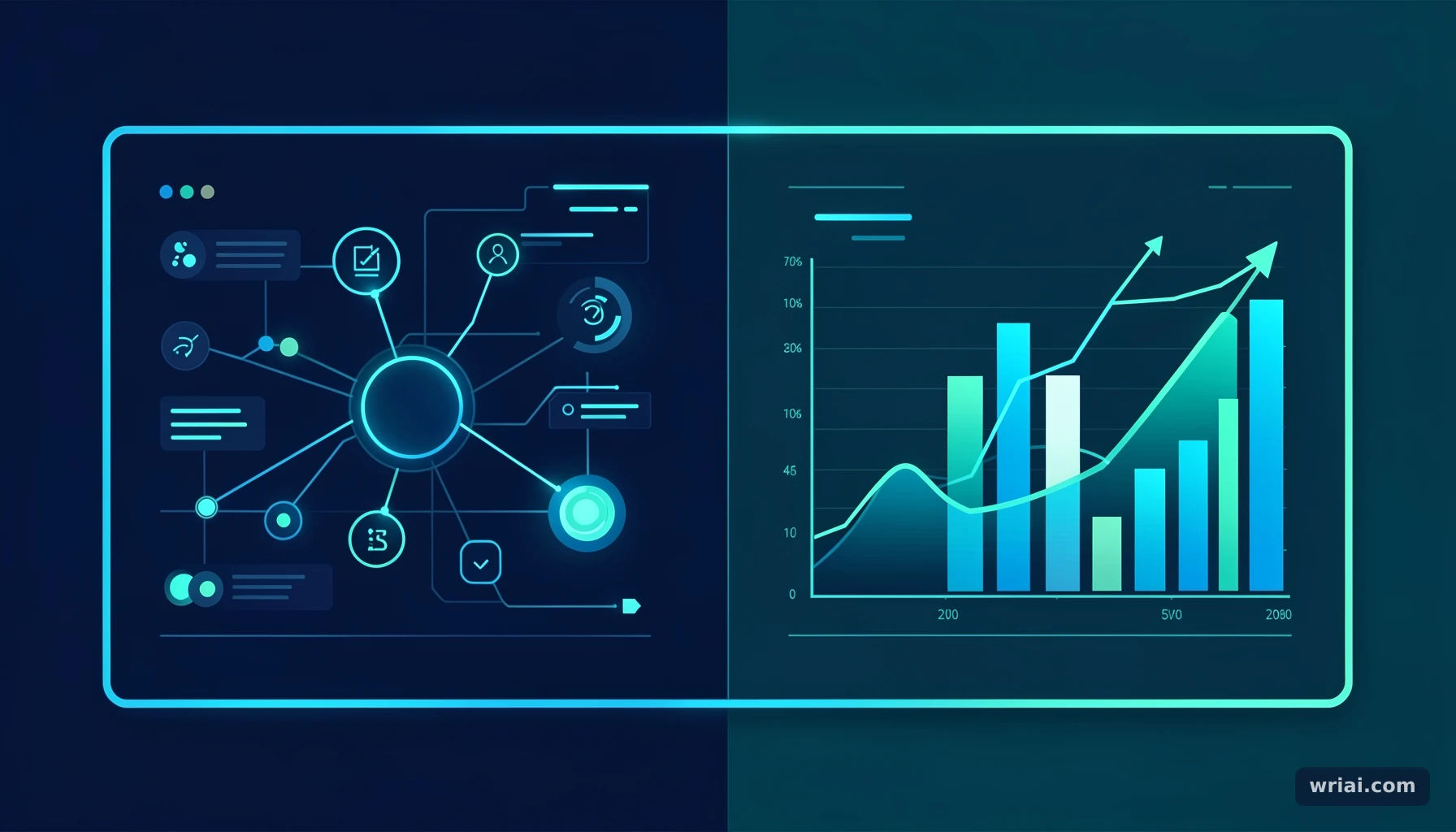
Wriai vs Alli AI is fundamentally a comparison between two different automation models: Wriai manages the full content-growth lifecycle, while Alli AI primarily automates on-page and technical SEO changes across an existing website.
Core Definitions and Real-World Architecture
Wriai and Alli AI serve different operational priorities. Wriai is an autonomous AI SEO automation and content lifecycle management platform designed to discover opportunities, create content, publish it, distribute it, and recover declining performance. Alli AI is primarily associated with on-page SEO automation, code-level changes, metadata optimization, and site-wide technical improvements.
 Wriai vs Alli AI: Which SEO Automation Platform Fits Your Team? - Core Definitions and Real-World Architecture
What Wriai is designed to execute
Wriai functions as an SEO execution engine, rather than only an analysis dashboard or AI writing assistant, as explored in this Wriai vs MarketMuse comparison. Its architecture connects opportunity discovery, content planning, production, deployment, optimization, distribution, and lifecycle monitoring in one closed-loop workflow.
The platform’s Golden Opportunity Engine analyzes search data, website information, Google Search Console data, and competitor signals to identify ranking gaps and high-potential keyword opportunities, a distinction further examined in the Wriai vs Clearscope comparison. These opportunities become the foundation for content clusters rather than isolated article ideas.
The Autonomous E-E-A-T Content Studio then supports research, content creation, optimization, and cluster management. Built-in AI image generation can produce relevant visual assets, while automated publishing sends completed content to a connected CMS.
After publication, Wriai can automate:
- Contextual internal and external linking
- URL submission for search engine indexing
- Social distribution across connected channels
- Performance monitoring
- Content Decay Recovery workflows for declining pages
This makes Wriai particularly relevant to teams that want to scale organic search execution without manually coordinating every stage.
What Alli AI is designed to optimize
Alli AI is positioned differently. Its central use case is on-page SEO automation, often involving site-wide optimization, metadata changes, and code-level adjustments deployed through a website integration or snippet-based implementation.
That model is valuable when a team has an established website but needs to improve technical and on-page consistency at scale. For example, a large site may need updates to title tags, meta descriptions, structured page elements, or other optimization rules applied across many URLs.
The distinction is strategic:
- Alli AI primarily improves existing site assets.
- Wriai primarily builds, manages, and expands organic growth assets.
This does not mean the platforms are direct substitutes in every environment, much like the distinction discussed in the Wriai vs Frase comparison. A technical SEO team may prioritize Alli AI when rapid site-wide remediation is the main requirement. A content-led growth team may prioritize Wriai when the bottleneck is opportunity identification, publishing capacity, content clustering, and ongoing refresh management.
The architectural difference: optimization layer versus growth loop
The clearest way to understand Wriai vs Alli AI is to compare their operating loops.
Alli AI can be understood as an optimization layer applied to an existing website. It helps teams identify or implement changes that improve current pages and site architecture.
Wriai is structured as a closed-loop growth system:
Opportunity → Research → Create → Publish → Link → Index → Distribute → Monitor → Recover
This distinction matters because SEO performance rarely depends on one activity. A technically optimized website can still lack topical coverage, publishing velocity, internal links, or a systematic content refresh process. Conversely, a large publishing program can underperform if technical and on-page foundations are weak.
From Alex Vance’s perspective, the correct platform decision should therefore begin with the team’s primary constraint. If the constraint is implementation of site-wide SEO changes, an on-page automation platform may be the better fit. If the constraint is the entire content lifecycle, Wriai provides the broader execution model. More context about Wriai’s positioning is available through its About Us information.
Technical Specifications and Workflow Mechanics
The practical difference between Wriai and Alli AI becomes clearer when their functions are mapped against the stages of an SEO program. Wriai covers a broader content lifecycle, while Alli AI concentrates more heavily on technical and on-page intervention within an existing site.
Comparison matrix: capabilities and operating scope
| SEO capability or workflow stage | Wriai | Alli AI |
|---|---|---|
| Primary role | Autonomous AI SEO automation and content lifecycle management | On-page and technical SEO automation |
| Opportunity discovery | Golden Opportunity Engine uses search, website, GSC, and competitor data | Primarily supports optimization opportunities within an existing site |
| Keyword and ranking-gap analysis | Core platform workflow | Not the central documented positioning |
| Content cluster planning | Autonomous E-E-A-T Content Studio supports cluster strategy | Not the primary documented function |
| Content research and generation | Integrated into the content lifecycle | Not the primary documented function |
| AI-generated visual assets | Built-in AI image generation | Not identified as a core capability in the supplied specifications |
| CMS publishing | Automated publishing to a connected CMS | Primarily focused on site optimization rather than content lifecycle publishing |
| Internal linking | Smart contextual internal linking | Primarily associated with on-page and technical changes |
| External linking | Smart contextual external linking | Not identified as a core capability in the supplied specifications |
| Search engine indexing | Automated URL submission for indexing | Not identified as a core capability in the supplied specifications |
| Social distribution | Automated sharing across connected social channels | Not identified as a core capability in the supplied specifications |
| Content decay monitoring | Content Decay Recovery identifies and refreshes declining content | Not the central documented positioning |
| Competitor and trend monitoring | AI Market Radar monitors competitors and search trends | Primarily focused on optimization rather than market-radar content planning |
| Best-fit operating model | Build, publish, optimize, distribute, and refresh content at scale | Apply technical and on-page improvements across existing pages |
| Typical strategic question | “What should we create, publish, and improve next?” | “How can we optimize this existing site more efficiently?” |
How the Wriai interface should be understood
The supplied specifications do not describe a screen-by-screen interface or a fixed navigation structure. However, its functional interface can be understood as a sequence of operational workspaces or automation stages.
A typical Wriai operating model begins with opportunity data. The team connects relevant website and search information, then reviews ranking gaps and potential topics identified by the Golden Opportunity Engine. Planning moves into content clusters, where related pages can be organized around a broader search opportunity.
The Content Studio represents the execution layer. It supports research, generation, optimization, and visual asset creation. Rather than treating an article as a finished deliverable, the workflow treats it as one component within a larger topical and lifecycle system.
Deployment and monitoring complete the operational loop. A connected CMS receives content, linking and indexing workflows support discovery, and social distribution extends reach beyond search. Performance monitoring then determines whether content should remain active, be improved, or enter a Content Decay Recovery workflow.
Alli AI’s interface and implementation model are better understood through the changes it applies to the website. Its value is concentrated in controlling and deploying on-page or technical adjustments at scale, rather than managing a full editorial lifecycle.
Technical fit by team objective
A useful comparison should evaluate workflow ownership, not simply feature count.
Wriai is more technically aligned with:
- Programmatic SEO initiatives built around long-tail clusters
- SaaS businesses expanding topical coverage
- Agencies managing multiple content operations
- Websites that need continuous content refreshes
- Teams seeking automated CMS publishing and distribution
- Organizations that want fewer manual handoffs between SEO and content teams
Alli AI is more technically aligned with:
- Large websites requiring systematic on-page changes
- Teams prioritizing metadata and code-level optimization
- Technical SEO programs with an existing publishing process
- Organizations that need site-wide implementation efficiency
- Websites where the principal issue is optimization of current pages
The tools may also be complementary. An organization could use a technical SEO automation layer to improve existing architecture while using Wriai to expand content coverage and manage the lifecycle of new and aging pages. That combination should be evaluated carefully, because overlapping automation rules can create conflicts if ownership, approval, and change tracking are not defined.
Step-by-Step Implementation Workflows
Wriai is best implemented as an operating process rather than as a standalone content generator. The strongest results come from connecting data, planning, publishing, technical controls, and measurement into one repeatable sequence.
Step 1: Define the growth constraint and connect data
Start by identifying whether the main constraint is technical optimization, content production, opportunity discovery, or lifecycle management.
For a Wriai implementation, connect the website and available Google Search Console data so the Golden Opportunity Engine can assess current visibility, ranking gaps, and opportunities. Competitor and search data also contribute to opportunity identification.
Do not begin by asking the system to produce a large volume of articles without a strategic input. Establish:
- Priority markets and audience segments
- Existing content categories
- Important commercial or informational themes
- Pages that already perform well
- Pages showing signs of decline
- Internal approval and publishing requirements
This baseline prevents the automation from treating every keyword as equally valuable.
Step 2: Build clusters before generating individual pages
The next stage is planning. Wriai’s Content Studio can organize opportunities into content clusters, helping the team distinguish core topics from supporting long-tail pages.
A practical cluster may contain:
- A central topic page that establishes the main subject.
- Supporting pages addressing specific questions or subtopics.
- Comparison, use-case, or implementation pages.
- Internal links that connect the cluster contextually.
- Refresh rules for pages whose performance declines.
This structure is more resilient than publishing disconnected articles because it gives each page a defined role. It also provides a framework for internal linking and future content decay recovery.
For agencies, this planning stage should be replicated per client site. Wriai’s agency-focused automation workflow is especially relevant when multiple websites need consistent execution without identical content strategies.
Step 3: Execute content, imagery, and optimization
Once the cluster is defined, the Content Studio supports research, content generation, optimization, and AI-generated visual assets. Human review remains important for factual accuracy, brand alignment, subject-matter expertise, and regulated topics.
The objective is not merely to produce fluent text. A strong page should satisfy a clearly defined search intent, contribute unique information, use appropriate internal links, and fit the role assigned within the cluster.
Before publishing, validate:
- Search intent alignment
- Factual claims and source quality
- E-E-A-T signals
- Heading and entity coverage
- Internal and external link relevance
- Image context and accessibility
- Brand terminology
- Duplicate or cannibalizing topics
Alli AI may enter this stage when the organization needs site-wide on-page or technical changes applied to existing templates and pages. The division of labor should be explicit: Wriai manages content lifecycle execution, while Alli AI addresses the optimization layer.
Step 4: Publish, index, and distribute
Wriai’s automated publishing capability connects the completed workflow to a CMS. After deployment, smart linking can add contextual internal and external relationships, while indexing workflows submit URLs to search engines.
Social distribution extends the content beyond organic search. However, automated distribution should use channel-appropriate formatting and publishing rules. A technical article, product comparison, and social post should not necessarily use identical copy.
A controlled deployment process should include:
- Draft or staging status before publication
- CMS permissions appropriate to the team
- URL and canonical checks
- Link validation
- Image rendering checks
- Indexing submission logs
- Social channel confirmation
- Rollback or correction procedures
Automation increases execution speed, but it also increases the importance of governance. A publishing error repeated across hundreds of pages can become a large-scale quality problem.
Step 5: Monitor performance and recover decay
The final stage is lifecycle management. Wriai monitors content performance and can trigger Content Decay Recovery workflows when pages lose visibility or relevance.
A refresh should diagnose the cause of decline rather than mechanically rewrite the page. Potential causes include:
- Changed search intent
- New competitors
- Outdated facts
- Weak internal linking
- Insufficient topical depth
- SERP format changes
- Reduced relevance to the target audience
- Technical indexing or rendering issues
A useful refresh workflow records the original page state, identifies the performance signal, updates the content, and measures the result over time. This creates a repeatable improvement loop rather than a one-time editorial intervention.
Pro Tips, Pitfalls, and Practical Use Cases
The most important Wriai vs Alli AI implementation lesson is that automation should be assigned to the correct layer. Many failures occur when teams automate production before defining ownership, quality controls, and measurement.
Common pitfalls and their solutions
Pitfall 1: Treating Wriai as only an AI writer.
This underuses the Golden Opportunity Engine, cluster planning, publishing, linking, indexing, distribution, and decay recovery functions. The solution is to design a full workflow before generating content.
Pitfall 2: Treating Alli AI as a content strategy platform.
Alli AI’s documented positioning is primarily technical and on-page automation. If the organization needs topic discovery, cluster development, and editorial lifecycle control, another layer is required.
Pitfall 3: Publishing without a quality gate.
Autonomous workflows can accelerate errors as efficiently as they accelerate useful output. Require review rules for factual claims, sensitive subjects, brand language, links, images, and duplicate topics.
Pitfall 4: Ignoring cannibalization.
Programmatic SEO can create multiple pages targeting nearly identical intents. Cluster planning should define page purpose and prevent competing URLs from being generated without a clear reason.
Pitfall 5: Measuring only publication volume.
The number of pages published is an activity metric, not a growth outcome. Track qualified impressions, ranking movement, clicks, indexed coverage, conversions where available, and recovery performance for refreshed pages.
Practical use cases
For programmatic SEO scaling, Wriai can identify long-tail opportunities, organize them into clusters, generate supporting pages, publish them through a CMS, and apply linking and indexing workflows. Human review should focus on templates, representative samples, and high-risk topics.
For agency white-label operations, the platform can support repeatable processes across multiple sites. Each client still requires separate audience research, brand controls, approval rules, and performance definitions. Automation should standardize execution, not erase strategic differentiation.
For content refresh cycles, Content Decay Recovery can identify pages that require attention. This is particularly valuable for evergreen libraries where performance declines because information, competitors, or user expectations have changed.
For hands-off CMS management, automated publishing can maintain a consistent schedule while reducing repetitive formatting and deployment work. Governance remains essential, especially when multiple contributors or client properties share the same automation system.
How to choose between the platforms
Use this decision sequence:
Is the main problem existing-page optimization?
Prioritize an on-page automation approach such as Alli AI.Is the main problem discovering what to create next?
Wriai’s opportunity and market intelligence capabilities are more directly relevant.Is the main problem content production and publishing capacity?
Wriai is designed to manage the broader content lifecycle.Is the main problem declining performance across an existing content library?
Wriai’s Content Decay Recovery workflow may be a stronger fit.Are both technical and content operations bottlenecks?
Evaluate whether a controlled combination is practical, with clear separation between technical changes and content lifecycle actions.
For readers comparing adjacent platforms, the Wriai Alternative guide can provide additional context on how different SEO automation models compare.
Enterprise considerations and the 2026 outlook
In 2026, enterprise SEO teams are increasingly evaluating platforms by their ability to execute a measurable operating loop, not merely by the quality of generated recommendations. The strategic shift is from isolated automation to orchestrated, closed-loop search operations.
Enterprise evaluation should cover:
- Data access and permission management
- CMS integration and publishing controls
- Multi-site workflow separation
- Approval and audit processes
- Duplicate-content prevention
- Change logging and rollback procedures
- Search Console and competitor-data governance
- Content quality and E-E-A-T review
- Indexing and distribution monitoring
- Performance reporting by cluster and lifecycle stage
Alex Vance’s view is that the most defensible AI SEO systems will connect discovery to action and action to measurement. An engine that finds a keyword but does not execute the content, publish it, link it, distribute it, and revisit it leaves too much operational value on the table.
That is Wriai’s principal distinction in this comparison. Alli AI is well aligned with site-wide on-page and technical efficiency. Wriai is aligned with organizations seeking an autonomous content-growth infrastructure that manages SEO work from opportunity discovery through recovery.
FAQ
Is Wriai better than Alli AI for SEO automation?
Neither platform is universally better; they address different automation priorities. Wriai is better aligned with content-led growth programs that require opportunity discovery, cluster planning, AI-assisted production, CMS publishing, linking, indexing, social distribution, monitoring, and content recovery. Alli AI is more closely aligned with on-page and technical SEO automation across an existing website. The appropriate choice depends on whether the primary bottleneck is building and managing content or implementing site-wide optimization changes.
Can Wriai and Alli AI be used together?
They may be used together when responsibilities are clearly separated. Wriai can manage the content lifecycle, including discovery, cluster development, publishing, linking, distribution, and refresh workflows. Alli AI can support technical or on-page optimization across existing pages. Before combining them, define ownership of metadata, templates, canonical elements, internal links, and other site changes. Without governance, overlapping automation rules could create inconsistent updates or make it difficult to identify which system caused a change.
What makes Wriai different from a standard AI content writer?
Wriai is designed as an autonomous SEO execution engine rather than a text-generation utility alone. Its documented workflow extends from ranking-gap discovery and content cluster planning to research, generation, AI imagery, CMS publishing, contextual linking, indexing submission, social distribution, performance monitoring, and Content Decay Recovery. This lifecycle model means the platform addresses what to create, how to deploy it, and when to improve it—not only how to draft an article.
Which platform is more suitable for agencies managing multiple websites?
Wriai is particularly suited to agencies that need to coordinate content-led SEO workflows across multiple websites. Its use cases include programmatic SEO scaling, automated publishing, content refresh cycles, and repeatable lifecycle management. Each client still requires independent strategy, brand controls, approval rules, and performance reporting. Alli AI may be more suitable for agencies whose primary service is implementing on-page or technical changes across established client websites. The deciding factor is the agency’s dominant delivery model.
Wriai is an end-to-end content lifecycle management platform that handles discovery, creation, and distribution. In contrast, Alli AI focuses on automating technical on-page SEO tasks and code-level website optimizations.
Alex Vance
Head of AI SEO & Autonomous Growth Systems
Specialist with 9+ years of experience in algorithmic search engine optimization, semantic knowledge graphs, and large-scale LLM automation.