Wriai vs Lumar: AI SEO Automation vs Enterprise Technical SEO

Wriai vs Lumar highlights two fundamentally different approaches to SEO success in 2026. Wriai functions as an autonomous AI agent that executes complete SEO workflows from keyword opportunity identification through content creation, publishing, indexing, and performance monitoring. Lumar delivers enterprise-grade technical optimization, focusing on site architecture, speed, accessibility, and generative engine readiness. Understanding these differences—and comparing them with Wriai vs Botify—helps SEO teams determine whether their primary need is scalable content velocity and ranking automation or deep technical site health that supports long-term crawl efficiency and AI search visibility.
Understanding Wriai and Lumar: Core Capabilities and Strategic Fit
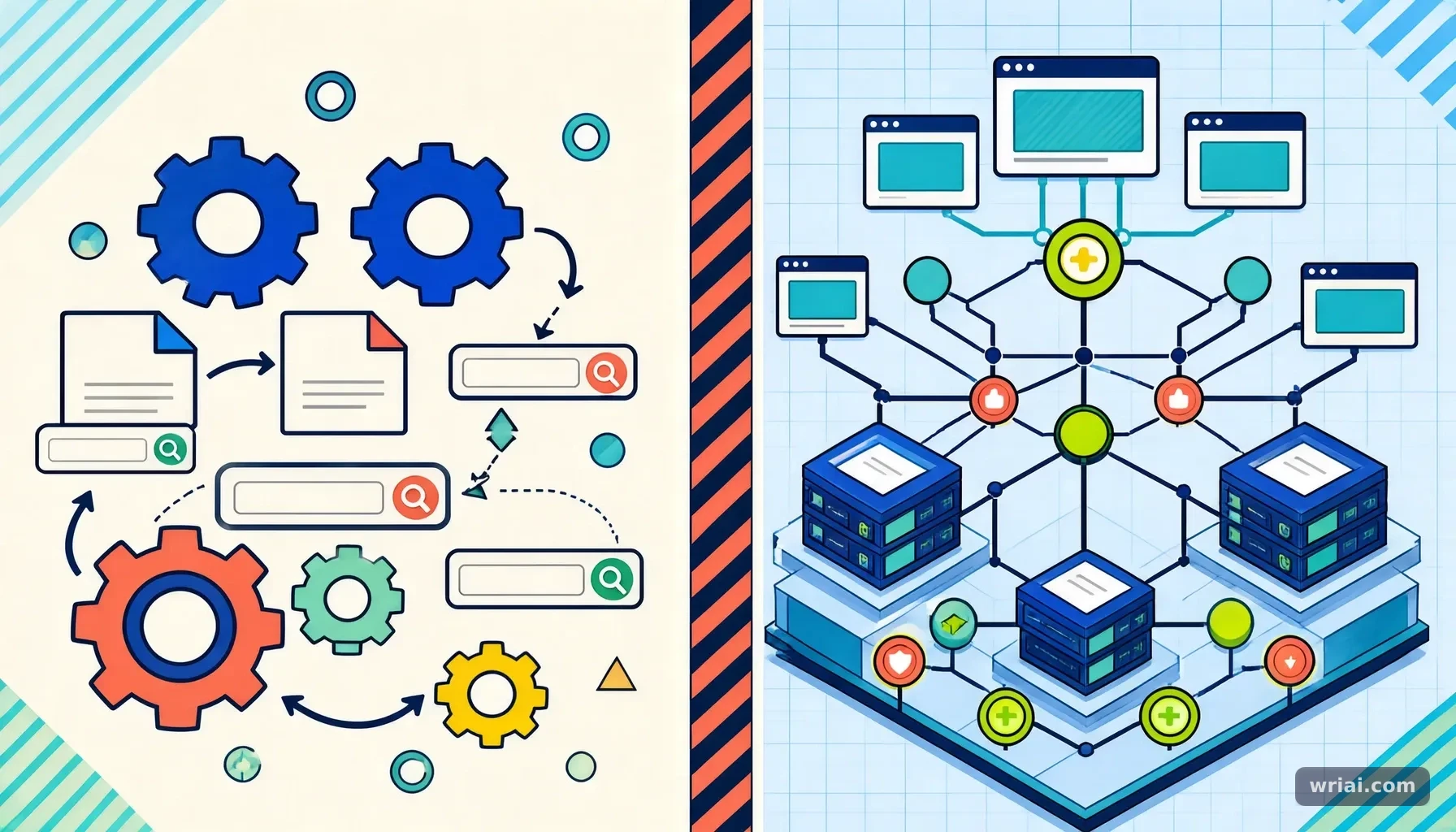
Wriai’s SEO autopilot automates the entire content lifecycle, turning data signals into published, optimized, and distributed assets without constant human oversight. Lumar serves as a comprehensive auditing and optimization engine built for large-scale websites that require precision technical improvements across performance, accessibility, and emerging generative engine optimization standards.
Wriai’s Autonomous AI SEO Engine
At its foundation, Wriai integrates directly with platforms like WordPress, Shopify, and Ghost to manage a closed-loop process. It begins with opportunity discovery by analyzing Google Search Console data to identify keywords ranked in positions 4 through 20—often called golden opportunities. The system then conducts deep research, generates E-E-A-T content exceeding 2,500 words that incorporates relevant entities and semantic depth, and automatically publishes to the CMS.
Fast indexing follows through direct API submissions, typically achieving Googlebot discovery in under 24 hours. The platform continues by building contextual internal links, facilitating link exchanges, distributing content across social channels, and monitoring for decay so it can trigger refreshes. AI image generation creates supporting visuals tailored to the content. This end-to-end automation allows SEO professionals to scale output dramatically while maintaining quality. From experience managing large-scale LLM automation projects, this closed-loop design eliminates the traditional gaps between strategy and execution that often stall organic growth.
 Wriai vs Lumar: AI SEO Automation vs Enterprise Technical SEO - Understanding Wriai and Lumar: Core Capabilities and Strategic Fit
Lumar’s Enterprise Technical Optimization Platform
Lumar takes a different path by prioritizing the structural integrity of websites. It crawls at enterprise scale to surface issues related to site speed, render-blocking resources, accessibility compliance, and crawl budget inefficiencies. The platform excels at identifying how technical elements affect both traditional search engines and generative AI systems that synthesize answers from web content.
Its strength lies in providing actionable insights that improve core web vitals, fix schema implementation problems, and optimize site architecture for better indexing priority. Organizations running complex, high-page-count websites use Lumar to maintain technical baselines that support all other SEO activities. Without this foundation, even the best content can remain undiscovered or under-ranked due to underlying site health problems.
Why This Comparison Matters for SEO Decision Makers
The choice between AI-driven workflow automation and technical platform auditing directly impacts resource allocation and outcomes. Teams drowning in manual content tasks benefit from AI SEO workflow automation that executes full cycles independently. Conversely, enterprises with sprawling domains and compliance requirements need robust technical visibility first.
In practice, many organizations eventually combine both approaches, but understanding their distinct value prevents misallocation of budget and engineering time. The 340% average organic traffic lift reported by users of autonomous content pipelines demonstrates the power of execution-focused tools when technical foundations are already solid.
Wriai vs Lumar: Detailed Feature Comparison
A side-by-side evaluation reveals clear specialization rather than direct overlap. The following table summarizes the most relevant capabilities for SEO leaders evaluating these platforms based on real workflow needs, technical requirements, and measurable outcomes.
| Aspect | Wriai | Lumar | Best Applied When |
|---|---|---|---|
| Primary Strength | Autonomous 10-step SEO workflow execution | Large-scale technical auditing & optimization | Content velocity vs site health |
| Opportunity Discovery | Golden Opportunity Engine scans positions 4-20 using Search Console data | Crawl-based technical gap analysis | Identifying ranking gaps vs crawl inefficiencies |
| Content Production | Generates 2,500+ word E-E-A-T articles with semantic entity coverage | Optimizes existing content structure for performance | New content creation vs technical content refinement |
| Publishing & Distribution | Direct CMS integration, auto-publishing, social distribution | No direct publishing; focuses on recommendations | Hands-off content lifecycle vs guided fixes |
| Indexing Performance | Google Indexing API integration (<24h discovery) | Improves crawl efficiency and indexation priority | Speed of content discovery vs foundational indexing |
| Internal Linking | Automated contextual link suggestions and implementation | Technical link structure analysis | Scaling link equity vs fixing architecture |
| GEO & AI Search Readiness | Content structured for entity understanding and generative engines | Direct optimization for generative engine visibility | Content signals vs technical signals for AI overviews |
| Monitoring & Recovery | Content decay detection with automatic refresh triggers | Ongoing technical debt monitoring | Performance maintenance vs technical compliance |
| Typical Scale | Content-heavy sites, agencies, e-commerce catalogs | Enterprise websites with 100,000+ pages | Growth through content vs stability at scale |
| Key Outcome Metric | Average 340% organic traffic growth | Improved Core Web Vitals, accessibility scores, reduced technical errors | Traffic and rankings vs site quality scores |
This comparison shows complementary rather than competitive positioning. Wriai removes operational friction in content marketing, while Lumar ensures the website itself can support increased content volume and AI-driven search demands.
Automation Depth and Workflow Execution
Wriai’s 10-step pipeline creates a true closed loop: discovery, research, creation, publishing, linking, indexing, distribution, monitoring, and recovery. Each stage feeds the next with minimal manual intervention. This reduces the typical six-to-eight-week lag between identifying an opportunity and seeing indexed, linked content. The system’s ability to act on its own insights separates it from tools that only generate recommendations.
Technical Depth and Site Health Focus
Lumar’s crawling technology identifies nuanced problems that affect both users and search systems, including how JavaScript rendering impacts accessibility scores and how poor internal architecture fragments PageRank. Its GEO capabilities examine how technical elements influence whether content appears in AI-generated answers. For organizations managing compliance across multiple regions, these technical signals often determine long-term viability more than content volume alone.
Integration Patterns and Team Impact
Integration styles reflect their purposes. Direct CMS connections and API-based publishing suit teams that want to maintain velocity. Enterprise platforms like Lumar integrate with existing developer workflows, ticketing systems, and BI tools. The team impact differs significantly: content strategists gain leverage with automation, while technical SEO specialists and engineers receive precise, prioritized lists of fixes that move site-wide metrics.
Practical Guide to Implementing Wriai or Lumar in Your SEO Operations
Successful implementation requires matching the platform to current bottlenecks. Begin by auditing your existing content production capacity and technical site score before selecting tools.
Step-by-Step Implementation for Autonomous SEO Automation
First, connect your Google Search Console and CMS to enable opportunity detection. Configure the Golden Opportunity Engine to prioritize keywords with commercial intent that already show ranking traction. Next, establish content briefs that enforce E-E-A-T standards by incorporating authoritative entities and data points relevant to your niche.
Set publishing rules that align with your editorial calendar while allowing automatic triggers for high-priority items. Enable internal linking and indexing API submission to accelerate visibility. Finally, activate decay monitoring with thresholds that automatically queue updates when traffic drops below set percentages. Following this sequence typically results in the first batch of fully autonomous content appearing in search within days rather than weeks.
The system’s AI image generation should be configured to produce supporting visuals that enhance topical authority rather than serve as decorative elements. Regular review of the automated internal linking suggestions prevents over-optimization while strengthening topical clusters.
Deploying Technical SEO Platforms for Site-Wide Improvements
Begin with a full-site crawl to establish baseline metrics across speed, accessibility, and indexation. Prioritize issues that affect core web vitals and mobile usability first, as these have direct ranking correlations. Create a ticketing workflow that assigns technical fixes to developers with clear before-and-after success metrics.
Focus subsequent crawls on specific sections—such as category pages or blog clusters—to measure improvements in crawl efficiency. For GEO readiness, test how page elements appear when extracted by large language models. Schedule recurring crawls that align with major site updates or seasonal traffic changes. This methodical approach transforms technical SEO from reactive firefighting into proactive site stewardship that supports all other marketing activities.
Building a Combined Strategy for Maximum Results
The most sophisticated teams use technical platforms to maintain site health while layering autonomous content systems on top. First stabilize core web vitals and site architecture, then introduce automated content production to capitalize on the improved crawl budget. Monitor how new content affects technical metrics—particularly render time and index bloat.
Adjust automation rules based on technical findings. For example, if certain templates create crawl inefficiencies, modify the publishing templates before scaling content output. This symbiotic relationship typically delivers both improved technical scores and significant traffic growth.
Expert Tips, Common Mistakes, and Real-World Examples
Drawing from nine years optimizing semantic knowledge graphs and LLM-driven SEO systems, several patterns consistently separate successful implementations from stalled projects.
Pro Tips for Getting the Most Value
Map your keyword universe before activating automation to ensure the system targets commercially valuable terms rather than vanity metrics. Create feedback loops where ranking data from newly published content informs future research prompts. Use automated internal linking conservatively—focus on topical relevance rather than maximum link count.
For technical platforms, establish ownership of specific metrics across teams. Accessibility improvements often deliver unexpected SEO benefits through better user signals. Combine both tools by feeding technical insights into content generation parameters so new articles are born technically sound rather than requiring later fixes.
Common Mistakes That Waste Resources
A frequent error involves implementing content automation on technically compromised sites. Without proper crawlability and page speed, even perfectly optimized articles fail to gain traction. Another mistake is treating automation as a complete replacement for strategy—human oversight remains essential for brand voice and competitive differentiation.
Many teams also overlook content decay monitoring, allowing once-successful pages to gradually lose visibility. On the technical side, focusing exclusively on vanity metrics like total pages indexed instead of user-centric measurements such as interaction with AI overviews leads to misaligned priorities.
Real-World Examples of Impact
One e-commerce catalog implemented autonomous content pipelines for product category explanations and supporting blog content. After addressing initial technical recommendations around template speed, the site saw sustained traffic growth through consistently refreshed, deeply researched articles. Another enterprise publisher used technical optimization to improve site speed by 40% and accessibility compliance, creating a stable foundation that allowed subsequent content automation to deliver compounding returns.
These examples demonstrate that sequencing matters: technical excellence creates the conditions for automation to thrive.
Choosing Between Wriai and Lumar: Recommendations for Different Business Contexts
Different organizations face unique constraints that make one approach more suitable than the other at specific growth stages.
Advice for Content Marketers and Digital Agencies
Agencies managing multiple clients benefit from systems that scale content production without proportionally increasing headcount. The ability to discover opportunities, generate authoritative content, publish, and distribute automatically aligns with the need to demonstrate consistent results across accounts. Focus on platforms that handle the full lifecycle so strategists can concentrate on client relationships and campaign architecture rather than writing and formatting articles.
Guidance for E-commerce and Product-Led Businesses
Online stores gain particular advantage from automation that can update product-adjacent content based on inventory, pricing, and seasonal trends. When combined with strong technical foundations, this creates category pages and supporting articles that convert search traffic while maintaining freshness. Prioritize solutions that integrate directly with your commerce platform and respect existing product data fields without requiring manual duplication.
Recommendations for Enterprise and Technical SEO Teams
Large organizations with complex information architectures should ensure technical excellence before scaling content velocity. Use comprehensive auditing platforms to maintain site health across thousands or millions of pages, then layer automation where content gaps exist. The combination protects against technical debt while capitalizing on content opportunities that emerge from competitive and search console data.
Teams in regulated industries particularly value the compliance and accessibility features that technical platforms provide alongside automation capabilities.
FAQ
What is the main difference between Wriai and Lumar?
Wriai functions as an autonomous AI agent that executes a complete 10-step SEO workflow including opportunity discovery, E-E-A-T content generation, CMS publishing, fast indexing, internal linking, social distribution, and decay recovery. Lumar specializes in enterprise-scale technical auditing, identifying issues with site speed, accessibility, crawl efficiency, and generative engine optimization readiness. While Wriai focuses on creating and managing content at scale to drive traffic growth, Lumar ensures the website’s underlying architecture supports effective crawling, indexing, and visibility in both traditional and AI-powered search. Most advanced SEO programs eventually incorporate both capabilities rather than choosing one exclusively.
Can small to medium businesses benefit from either platform?
Smaller organizations can achieve significant results with autonomous SEO automation when they have content needs but limited writing resources. The ability to identify ranking opportunities and publish optimized articles with minimal manual effort levels the playing field against larger competitors. Technical platforms become valuable once the site grows beyond several hundred pages or when Core Web Vitals scores begin affecting rankings. Many growing businesses start with automation to build content momentum while addressing technical issues iteratively. The key is matching the platform to the most pressing bottleneck—whether that is content creation velocity or foundational site performance.
How do these platforms support generative engine optimization (GEO)?
Both approaches contribute to GEO but through different mechanisms. Content automation platforms structure articles with clear entity relationships, comprehensive topical coverage, and authoritative signals that generative engines prefer when synthesizing answers. Technical platforms optimize how that content is delivered—improving schema, page speed, and accessibility so the information can be accurately extracted and cited by AI systems. The most effective GEO strategy combines both: technically sound pages containing deeply researched, well-structured content that directly addresses user questions. Monitoring which content appears in AI overviews helps refine both technical and content parameters.
Should companies use Wriai and Lumar together?
Yes, they complement each other effectively in mature SEO programs. Technical optimization creates the stable foundation of crawlable, fast, accessible pages that content automation needs to succeed at scale. Once technical debt is reduced and core web metrics improve, autonomous content systems can publish at higher volumes without creating new problems. The combination typically delivers the strongest results: improved technical scores support better indexing of newly created content, while fresh, authoritative content strengthens topical authority and user engagement signals. Regular coordination between the platforms prevents conflicts and maximizes the impact of both investments.
Can a website use Wriai and Lumar at the same time?
Yes, using both platforms simultaneously is a common strategy for mature digital operations. Lumar handles technical site health, accessibility auditing, and JavaScript rendering checks, while Wriai focuses on autonomous content creation, internal linking, and search ranking growth. This combination ensures your technical foundation remains robust while scaling your organic content production. Separating technical oversight from content automation allows teams to maintain high standards across both site infrastructure and search visibility without workflow bottlenecks.
How do autonomous platforms like Wriai handle search engine indexing?
Autonomous systems typically utilize direct API integrations, such as the Google Indexing API, to notify search engine crawlers immediately after new content is published or updated. This rapid notification system accelerates discovery times, bringing average bot discovery down to under 24 hours. By automating the submission process alongside internal linking and sitemap updates, these platforms eliminate manual bottlenecks, ensuring that fresh content enters the search index and begins accumulating ranking data much faster than traditional manual publishing methods.
What distinguishes technical SEO audits from content lifecycle automation?
Technical SEO audits focus on infrastructure, including crawl errors, site speed, page performance, mobile responsiveness, and schema validation, which ensures search engines can easily navigate your site. Content lifecycle automation manages the creation, optimization, publishing, internal linking, social distribution, and ongoing decay monitoring of articles and product pages. While technical tools identify structural impediments, automation platforms actively produce and maintain the textual assets that drive organic traffic and conversions.
How does content decay monitoring protect long-term organic rankings?
Content decay monitoring continuously tracks historical performance metrics, traffic drops, and ranking fluctuations for published pages. When a previously high-performing article begins to lose positions or impressions, the monitoring system flags the URL for updates. Instead of letting old content lose its value permanently, the platform analyzes current search trends and competitor updates to refresh the text, update statistics, and re-optimize keywords. This continuous maintenance preserves your topical authority and stabilizes organic traffic over time.
Alex Vance
Head of AI SEO & Autonomous Growth Systems
Specialist with 9+ years of experience in algorithmic search engine optimization, semantic knowledge graphs, and large-scale LLM automation.