How to Get Website Content to Appear in AI Answers
To get website content displayed in AI answers, publish information that is easy to discover, understand, verify, and quote. The practical foundation is strong indexing, direct answers, clear headings, trustworthy evidence, structured data, relevant internal links, and regular updates. AI search systems do not reward a special “AI-only” format; they typically select indexed pages that clearly satisfy the user’s question and demonstrate topical relevance.
How AI systems choose website content to cite
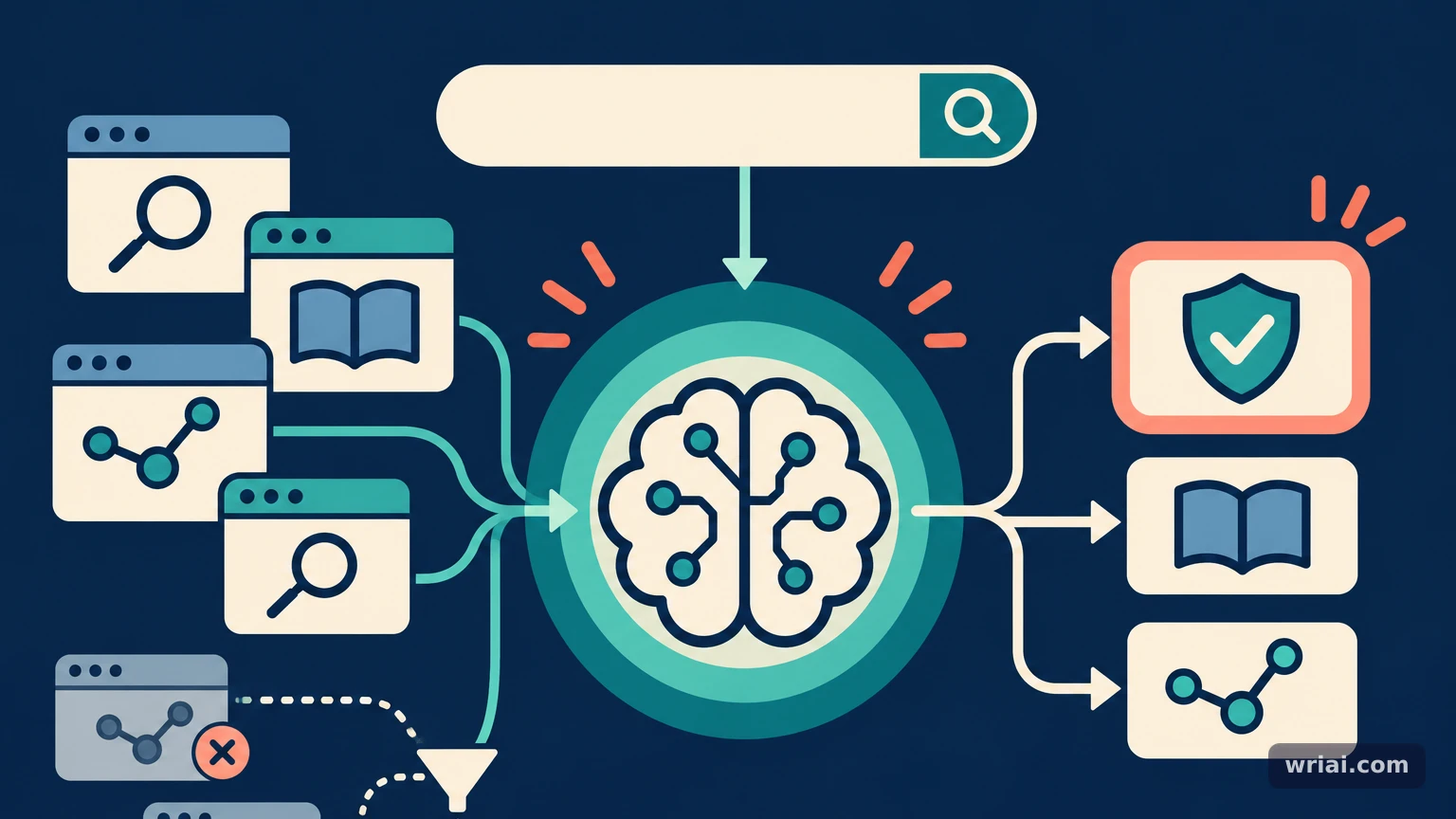
AI answer systems retrieve information from search indexes, web sources, knowledge systems, and other connected data. They then select passages that appear relevant, understandable, and sufficiently trustworthy for the question being asked.
 How to Get Website Content to Appear in AI Answers - How AI systems choose website content to cite
AI visibility starts with ordinary search eligibility
A page generally needs to be crawled, indexed, and eligible to appear with a search snippet before it can be considered for Google AI Overviews or AI Mode. Google-related guidance does not identify a separate technical requirement that guarantees inclusion in AI answers.
This distinction matters because many websites focus on writing conversational content while overlooking basic discoverability. A page may be well written but remain invisible if search engines cannot access it, if the URL is blocked, if the content is not indexed, or if the page has weak relevance to the query.
Check the fundamentals first:
- Confirm that important URLs can be crawled.
- Review indexing status in Google Search Console.
- Use descriptive page titles and headings.
- Make the main answer visible in the HTML content.
- Avoid placing essential information only inside images, scripts, or inaccessible interface elements.
- Link important pages from relevant, already-discovered pages.
A technical SEO audit can help identify crawlability, indexing, metadata, broken-link, and page-structure problems before content optimization begins.
Direct answers are easier for AI systems to extract
AI systems need to identify a reliable answer unit. A page that takes 600 words to reach its conclusion is harder to quote than a page that answers the question in the first paragraph and then explains the reasoning.
For example, a page targeting “How long does technical SEO take?” could begin:
Technical SEO improvements may produce early crawling or indexing changes within weeks, but measurable organic growth usually depends on the severity of the issues, website authority, competition, and the time required for search engines to recrawl and reassess the pages.
The paragraph gives a complete, qualified answer without pretending that one timeline applies to every website. Supporting sections can then explain technical fixes, measurement methods, and realistic expectations.
Use one clear answer per section. Follow the direct answer with:
- Definitions and qualifications.
- Evidence, examples, or documented sources.
- A comparison, checklist, or process.
- A concise takeaway for a specific reader situation.
This format serves both human readers and answer engines without reducing the article to disconnected snippets.
Structured content improves interpretation
Clear headings, semantic HTML, descriptive links, lists, tables, and relevant schema markup help search systems interpret relationships within a page. They do not guarantee citation, but they reduce ambiguity.
Use headings that describe the question or task, such as:
- “What makes content eligible for AI search?”
- “How to structure an answer-focused article”
- “What to update when organic traffic declines”
Schema markup should accurately describe the visible content. Depending on the page, relevant types may include Article, FAQPage, HowTo, Product, Organization, or LocalBusiness. Markup should never be used to claim information that users cannot see on the page.
A practical framework for AI-search-ready content
The table below maps common visibility factors to practical implementation and verification methods. It is a working reference, not a ranking guarantee.
 How to Get Website Content to Appear in AI Answers - A practical framework for AI-search-ready content
| Visibility factor | What to implement | How to verify it |
|---|---|---|
| Search eligibility | Crawlable URLs, indexable content, accessible HTML, valid canonical signals | Inspect the URL in Google Search Console and review crawl or indexing reports |
| Direct answer | State the primary answer in the opening paragraph or first relevant section | Ask whether a reader can understand the answer without scrolling |
| Clear structure | Use one H1, descriptive H2s, focused H3s, short paragraphs, lists, and tables | Review the page outline and scan it without reading every sentence |
| Search intent match | Address the actual task behind the query, including constraints and follow-up questions | Compare the page with the questions users ask and the dominant search results |
| Evidence and trust | Cite primary sources, identify authors, explain methods, and distinguish facts from judgment | Check whether important claims can be verified independently |
| Topical coverage | Explain definitions, process, examples, limitations, and related decisions | Build a topic checklist rather than repeating the same keyword |
| Internal linking | Link from relevant authoritative pages using descriptive anchor text | Crawl the site and check whether the target page has contextual links |
| Freshness | Update changed facts, screenshots, examples, procedures, and references | Record the last substantive review and compare the page with current reality |
| Structured data | Add only accurate schema that reflects visible page content | Validate markup and check for mismatches or errors |
| Media accessibility | Use descriptive alt text and explain images, charts, or diagrams in nearby text | Confirm that meaning remains clear if images are unavailable |
| Performance and usability | Support mobile access, readable layouts, stable pages, and accessible interactions | Test real page usability and review performance reports |
| Measurement | Track impressions, queries, clicks, conversions, and assisted outcomes | Compare Search Console data with analytics and business goals |
Build an answer hierarchy, not a keyword list
Keyword research is useful for identifying demand, but AI-ready content requires a hierarchy of questions. A single topic may include a definition, a procedure, a comparison, a cost consideration, a risk, and a troubleshooting question.
For example, “content decay recovery” may involve:
- What is content decay?
- How can it be detected?
- Is the decline caused by outdated information, competition, technical problems, or changing intent?
- Should the page be refreshed, consolidated, redirected, or retired?
- How should the result be measured?
Organize the article around these decisions rather than inserting variations of the phrase into every paragraph. Search systems can recognize related concepts when the content explains them naturally and accurately.
Use tables and lists when relationships matter
Tables are effective when readers need to compare options, stages, symptoms, or actions. Lists are useful for procedures and checks. Neither format should be added merely to make a page look structured.
A useful table has:
- Comparable rows.
- Consistent categories.
- Specific labels.
- A short explanation before or after the table.
- No unsupported precision.
For example, a content-refresh table might compare the observed problem, likely cause, recommended action, and measurement signal. That is more useful than a table that simply repeats keyword phrases.
A step-by-step process for earning AI citations
The most reliable approach is a closed-loop workflow: identify a genuine question, create the best answer, publish it correctly, connect it to the site, monitor performance, and improve it as evidence changes.
Step 1: Choose a question with a clear information gap
Start with a query where users need a useful explanation, not merely a definition. Examine the current search results, related questions, competitor pages, forum discussions, and Search Console queries.
Look for gaps such as:
- Important conditions omitted from existing answers.
- Conflicting recommendations that are not reconciled.
- Outdated instructions.
- Weak examples.
- Missing comparisons or decision criteria.
- A lack of first-hand experience or supporting evidence.
The strongest opportunity is not always the highest-volume keyword. A narrower question with clear intent may attract more qualified visitors and provide a better chance to become a cited source.
Step 2: Create a concise answer before writing the full page
Write the answer in one or two sentences before drafting the article. This prevents the page from drifting into general commentary.
Then create an outline that expands the answer through:
- A definition or immediate conclusion.
- The factors that affect the conclusion.
- A practical process.
- Examples and exceptions.
- Common mistakes.
- A short FAQ addressing unresolved follow-up questions.
Use one primary intent per page. If the user is trying to compare two software categories, do not force the same page to serve as a complete beginner tutorial, product review, and technical implementation guide.
Step 3: Add evidence, experience, and clear qualifications
Trustworthy content does not mean making absolute claims. It means showing how a conclusion was reached and explaining where it may not apply.
Use:
- Primary documentation and official guidance.
- Original observations from testing or implementation.
- Named authors with relevant experience.
- Dates for information that can change.
- Examples with enough context to be meaningful.
- Clear distinctions between established facts, informed recommendations, and hypotheses.
Alex Vance’s experience in algorithmic SEO, semantic knowledge graphs, and large-scale LLM automation supports a practical principle: optimize for retrieval clarity, not for imagined AI preferences. If a claim cannot be understood, located, and verified, adding more keywords will not solve the underlying weakness.
Step 4: Publish, connect, and monitor the page
After publication, confirm that the page is accessible and linked within the site. Relevant internal links help search engines discover the page and understand its relationship to related content.
A complete lifecycle includes:
- Publishing the page in the correct CMS location.
- Checking canonical and indexing signals.
- Submitting or requesting indexing when appropriate.
- Adding contextual links from related pages.
- Sharing the resource through relevant channels.
- Monitoring impressions, queries, clicks, rankings, and conversions.
- Updating or consolidating the page when its usefulness declines.
Wriai describes this as a closed-loop process—Opportunity → Research → Create → Publish → Link → Index → Distribute → Monitor → Recover—which reflects the fact that visibility is a lifecycle rather than a one-time writing task.
Step 5: Measure citation potential without relying on one signal
You may not always receive a visible report showing every AI citation. Measure the broader signals that indicate whether the content is being discovered and used:
- Impressions for relevant question-based queries.
- Growth in non-branded queries.
- Clicks from long-tail searches.
- Appearance of featured snippets or rich results where applicable.
- Referral traffic from AI platforms when identifiable.
- Assisted conversions and qualified engagement.
- Brand mentions or direct traffic after publication.
- Search performance for related entities and subtopics.
Do not delete a useful page simply because it has low clicks. An answer page may influence discovery, assist another conversion, or support a broader topic cluster. Evaluate its role alongside direct traffic.
Expert techniques, mistakes, and examples
High-quality AI visibility depends less on tricks than on reducing uncertainty for both readers and retrieval systems. The best pages make their scope, evidence, answer, and limitations obvious.
Pro tip: write in quotable answer blocks
A quotable answer block is a short passage that answers one precise question and remains accurate when separated from the surrounding page. It should contain the subject, action, condition, and limitation where necessary.
Weak:
There are many factors to consider, and results can vary.
Stronger:
A page is more likely to be considered for an AI answer when it is indexed, directly addresses the query, uses clear supporting structure, and demonstrates reliable evidence; these factors improve eligibility but do not guarantee citation.
The stronger version is specific without promising an outcome. Follow it with detail so the page is not just a collection of shallow answers.
Pro tip: make expertise visible in the content itself
Experience should appear through useful details, not vague claims of authority. Explain what was examined, what changed, which constraints mattered, and how success was judged.
For a page about declining traffic, an expert-level explanation would distinguish:
- A ranking decline caused by stronger competitors.
- A decline caused by changed search intent.
- A decline caused by outdated facts.
- A decline caused by indexing or technical errors.
- A decline caused by seasonal demand.
Each situation requires a different response. Refreshing every sentence will not repair a page that targets the wrong intent, and adding schema will not fix a page that is not indexed.
Mistakes that reduce answer visibility
Avoid these common patterns:
Burying the answer. Long introductions delay the information the reader came to obtain.
Overpromising inclusion. No legitimate method guarantees placement in AI answers. Search systems change their results dynamically.
Writing for a fictional AI score. Repetitive phrases, unnatural synonyms, and excessive headings can damage readability and trust.
Using unsupported statistics. Precise claims without a source are difficult to verify and may reduce credibility.
Ignoring indexing. Excellent content cannot compensate for a blocked, canonicalized, or undiscovered URL.
Treating FAQ schema as a shortcut. A FAQ section can improve clarity, but markup does not guarantee rich results or AI citations.
Refreshing without diagnosis. Changing the publication date or rewriting a few sentences is not a meaningful update if facts, examples, and intent remain outdated.
Example: improving a page about website audits
Imagine a page titled “What is a website audit?” It defines an audit in general terms but provides no process. A stronger version could:
- Define a website audit in the opening paragraph.
- Separate technical, content, internal-linking, and performance checks.
- Explain which issue should be fixed first and why.
- Include a table mapping symptoms to diagnostic actions.
- Show how to verify indexing and crawlability.
- Explain when a page should be improved, merged, redirected, or removed.
- Link to related resources using descriptive anchor text.
- Include an author profile and review date.
This structure gives AI systems multiple self-contained passages while giving readers a practical route from diagnosis to action.
Advice for different website situations
The right optimization sequence depends on the website’s maturity, subject, resources, and risk. A small service site should not follow exactly the same process as a large publishing operation.
If you are launching a new website
Prioritize discoverability and topical focus. Publish a small set of comprehensive pages that clearly explain what the site covers, who it serves, and which questions it answers.
Start with:
- A crawlable technical foundation.
- Clear organization and navigation.
- Author and organization information.
- A few high-value pages addressing specific user problems.
- Internal links connecting related explanations.
- Search Console verification and indexing checks.
Avoid producing hundreds of generic AI-generated pages before establishing quality standards. Volume can make it harder to review accuracy, detect duplication, and maintain a coherent topical structure.
If you already have traffic but no AI visibility
Audit existing pages before creating more content. Review which URLs receive impressions, which queries produce them, and where the page fails to answer the intent directly.
Prioritize pages that already have:
- Relevant impressions but weak clicks.
- Rankings near the top of the second page.
- Strong backlinks but incomplete coverage.
- Declining traffic after previously performing well.
- Content that is accurate but difficult to scan.
Improve the opening answer, headings, evidence, internal links, examples, and freshness. Then monitor query changes rather than judging the result only by the publication date.
If you operate a large site or content program
Use a governance system. Define standards for evidence, authorship, review frequency, schema, internal linking, and content retirement.
Automation can help identify opportunities, draft outlines, publish updates, connect related pages, distribute content, and monitor decay. However, review controls remain essential for regulated topics, factual claims, original research, and content that could affect important decisions.
Wriai is positioned as an autonomous AI SEO engine that coordinates opportunity discovery, research, content creation, publishing, linking, indexing, distribution, monitoring, and recovery. Used responsibly, this type of workflow can reduce operational gaps; it should not replace editorial judgment where accuracy and accountability are critical.
What may change in AI search
AI search will continue to make answers more conversational, comparative, and task-oriented. That increases the value of content that explains decisions, cites evidence, states limitations, and covers the next logical question.
The durable strategy is not to predict one interface. It is to maintain content that is:
- Indexed and technically accessible.
- Clear enough to retrieve accurately.
- Useful enough to satisfy the underlying task.
- Trustworthy enough to cite.
- Fresh enough to remain correct.
- Connected to a coherent site-wide knowledge structure.
FAQ
Can any website guarantee that its content will appear in AI answers?
No. Website owners can improve eligibility and citation potential, but no legitimate tactic guarantees inclusion in Google AI Overviews, AI Mode, ChatGPT Search, Perplexity, or another answer system. The page should be indexed, relevant to the question, clearly structured, and supported by trustworthy information. Even then, results may vary by query, location, device, language, user context, competition, and changes to the search system.
Does content need special AI SEO schema to be cited?
No special schema guarantees citation. Accurate structured data can help search engines interpret entities, page types, questions, and relationships, but it must match visible content. The stronger foundation is crawlable and indexable HTML, a direct answer, clear headings, useful supporting detail, credible evidence, and relevant internal links. Add schema where it genuinely describes the page rather than using markup as a shortcut for weak or incomplete content.
Should I create separate pages for every conversational question?
Not necessarily. Create separate pages when the questions represent different search intents, audiences, decisions, or levels of detail. Combine closely related questions when one comprehensive page can answer them without becoming confusing. A useful topic cluster might include one foundational guide, several focused supporting pages, and contextual internal links between them. Avoid publishing many near-duplicate pages that differ only by minor keyword variations.
How often should content be updated for AI search visibility?
Update content when facts, procedures, sources, examples, search intent, or competing coverage changes—not simply on a fixed schedule. Review high-value pages regularly, monitor declining queries, and investigate whether the problem is freshness, indexing, technical performance, or intent mismatch. A meaningful update may require new evidence, revised recommendations, updated screenshots, better examples, or structural changes. Changing only the date or a few phrases is unlikely to improve usefulness.
Alex Vance
Head of AI SEO & Autonomous Growth Systems
Specialist with 9+ years of experience in algorithmic search engine optimization, semantic knowledge graphs, and large-scale LLM automation.