Content Creation for SEO: A Repeatable Workflow From Keyword to Published Post
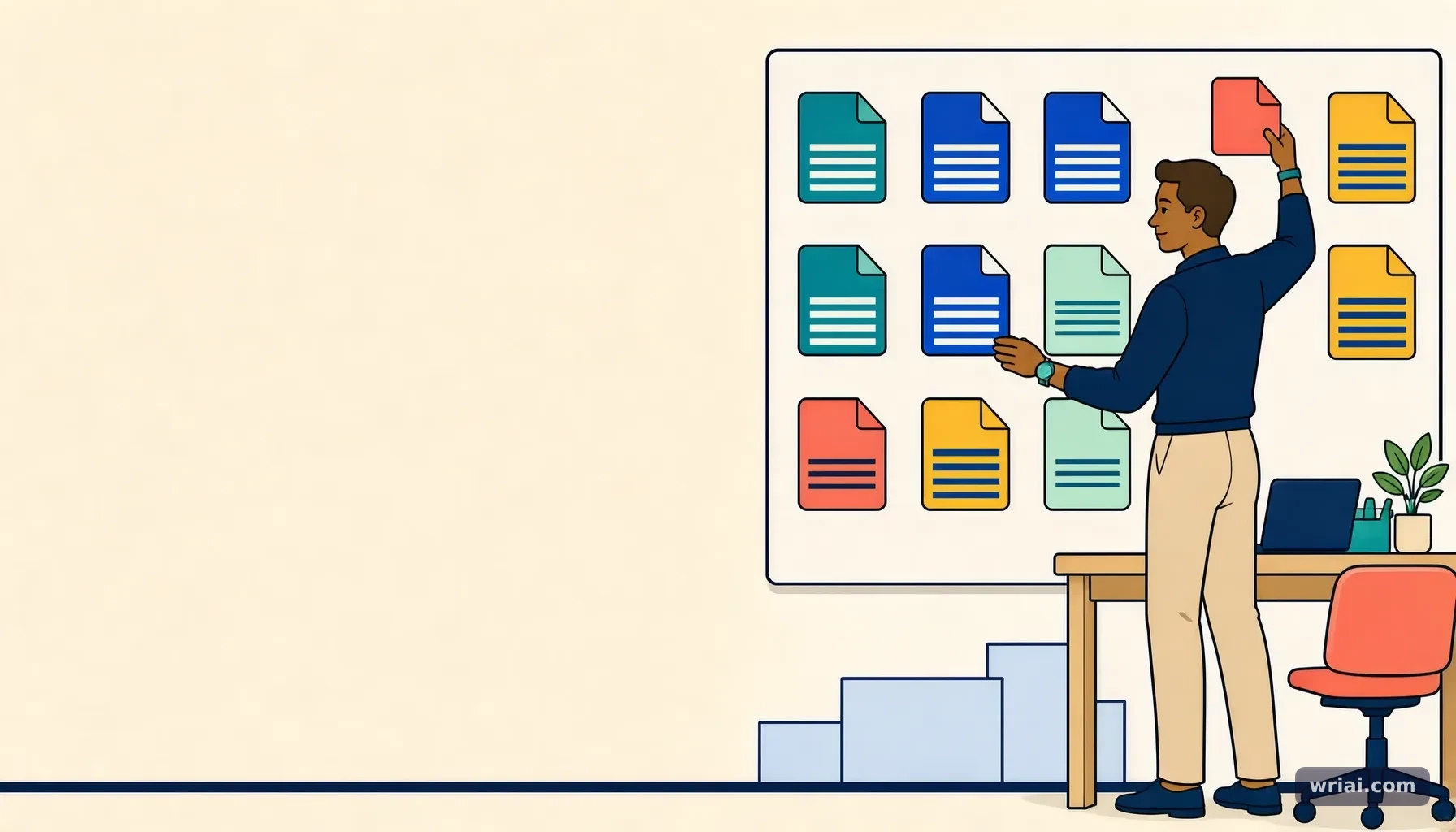
Content creation for SEO is the process of planning, researching, writing, publishing, and maintaining pages that meet searchers’ needs and can be understood by search engines. A reliable workflow starts with a specific opportunity, then connects search intent, accurate information, useful structure, technical basics, distribution, and ongoing performance review. The goal is not simply to produce more articles; it is to build content that remains useful and discoverable.
What SEO content creation involves—and why it matters
SEO content creation combines editorial judgment with search-focused planning. It helps a website answer relevant questions consistently, while giving search engines and AI-driven discovery tools clear signals about what each page covers.
It is more than writing an article
A search-focused content workflow begins with choosing keywords for content writing before drafting and continues after publication. It includes choosing a topic, checking what the searcher needs, researching the subject, creating a well-organized page, publishing it correctly, and reviewing whether it continues to perform.
That distinction matters because a polished article can still miss its purpose. It may target a broad phrase without addressing the reader’s actual question, overlap with another page on the same site, or lack the internal links that help visitors find related guidance. Content can also lose relevance as products, practices, or search results change.
A useful way to think about the process is as a content lifecycle:
- Plan: identify a topic with a clear audience and purpose.
- Research: understand intent, competing pages, and information gaps.
- Create: produce accurate, original, easy-to-navigate content.
- Publish and connect: implement the page, links, and supporting assets.
- Monitor and improve: use performance signals to decide whether to update it.
Each stage affects the next. Skipping research, for example, often leads to a draft that answers a different question from the one the searcher asked.
Search intent gives the page its job
The same keyword can conceal several needs. Someone searching “content creation for SEO” may want a definition, a practical process, a comparison of AI writing assistants, or help building a repeatable team workflow. Before writing, identify the most likely task the reader wants to complete.
Review the kinds of pages currently appearing for the query, the questions they address, and what they leave unclear. Treat search results as evidence—not a template to copy. Your page should serve the reader’s goal while adding information, examples, or guidance that is specific and useful.
For instance, a beginner-focused guide should explain the workflow in plain language and show how to apply it. A guide for experienced content teams can go further into briefs, publishing checks, internal linking, and refresh decisions. In either case, define one main purpose for the page. Trying to make a single article serve every possible intent usually makes it less helpful to all of them.
Useful content supports both discovery and decision-making
Search optimization is not a reason to write for algorithms instead of people. A page should make its subject clear, answer the reader’s question, and provide a satisfying next step. Clear headings, descriptive language, relevant internal links, and a logical structure also help search systems interpret how the page relates to other topics on the site.
For AI-driven discovery as well as conventional search, clarity about entities and relationships can help. Use the names, concepts, and terminology readers need to understand the subject; explain specialized terms rather than scattering related phrases without context. Answer-focused passages and specific headings make information easier to navigate and summarize, but they do not guarantee placement in search or AI-generated answers.
The practical test is straightforward: after reading the page, can someone make progress on the task that brought them there? If not, more keyword variations will not fix the underlying problem.
Plan the work with a clear, useful reference system
A content plan should make decisions easier: what to create, what each page needs to cover, and how to judge whether it is ready. The table below translates the workflow into practical checks rather than prescribing arbitrary word counts or publishing quotas.
 Content Creation for SEO: A Repeatable Workflow From Keyword to Published Post - What SEO content creation involves—and why it matters
Use a brief that connects the topic to the reader
A good content brief is a decision document, not a collection of keywords. It should explain the intended reader, the question the page will answer, the page’s role within the broader site, and the evidence or examples the writer needs to include.
| Workflow stage | What to decide or check | Useful output |
|---|---|---|
| Opportunity selection | Is the topic relevant to the site and audience? Is there a clear question or need? | A defined topic and reason to cover it |
| Intent review | What task does the searcher appear to be trying to complete? | A primary reader goal |
| Page mapping | Does an existing page already address this topic? How will this page differ? | A distinct page purpose |
| Research | Which claims require verification? What do competing pages omit? | Notes, sources, and information gaps |
| Content brief | What questions, examples, entities, and actions belong on the page? | A usable outline for the writer |
| Draft and edit | Is the content accurate, complete, original, and easy to follow? | An editorially approved draft |
| Publishing | Are the title, headings, links, images, and page settings correct? | A published and connected page |
| Monitoring | What signals will indicate success, stagnation, or decline? | A review decision: keep, improve, or refresh |
Use the table as a sequence of decisions, not as a requirement to create a separate document for every small update. For a substantial guide, a written brief can prevent unnecessary revisions. For a minor update, a concise checklist may be enough.
Distinguish page types and their purpose
Not every search opportunity calls for a long-form article. A how-to guide, a product explainer, a comparison, and a concise answer page serve different needs. Choose a format that fits the task rather than assuming that length alone makes content comprehensive.
A practical content map can identify related topics that deserve separate pages. For example, a central guide to SEO content creation might link to focused pages on writing fundamentals, editorial planning, or automation. Each page needs a distinct purpose; otherwise, several URLs may compete to answer the same question.
A useful topic map records:
- The main audience and question for each page.
- The page format that best serves that question.
- The relationship to existing pages and relevant internal links.
- Any research or expert review needed before publication.
- Whether the page is new, already published, or due for an update.
This helps teams build depth around a subject without turning every related phrase into a separate, repetitive article.
Set quality checks before drafting
Pre-publication standards work best when writers and editors agree on them in advance. Decide what counts as a verified claim, when expert review is needed, and how the page should handle uncertainty. Establishing these checks early is particularly important when AI assists with research or drafting: generated text still needs human verification for factual accuracy, brand voice, technical correctness, and compliance.
A useful quality standard asks whether the page:
- Answers its intended question near the beginning.
- Covers essential subquestions without padding.
- Distinguishes sourced facts from interpretation or advice.
- Uses examples that genuinely clarify the subject.
- Includes links and visuals only where they help the reader.
- Has a clear next step or related resource.
These standards make quality review more consistent across writers and help reduce edits that are based only on personal preference.
Follow a practical workflow from opportunity to publication
A repeatable workflow turns SEO content creation into a series of manageable decisions. The sequence below applies whether one person handles the whole process or a team shares research, writing, editing, and publishing.
Step 1: Choose an opportunity and confirm the intent
Start by finding a topic that is relevant to your audience and website—not simply a phrase with apparent search demand. Search data, ranking gaps, audience questions, and competitor coverage can help reveal where a useful page may be missing. Then inspect the query and related results to understand what readers expect.
Write a one-sentence purpose statement before outlining, such as: “This guide helps a small content team plan, publish, and maintain search-focused articles.” If you cannot state the page’s job clearly, the topic may be too broad, or it may overlap with an existing page.
Next, check whether your site already has content addressing the same need. A new article should have a meaningful distinction: a different audience, a more specific task, new evidence, or a clearer format. This prevents publishing a second page that repeats the first without adding value.
Step 2: Research the subject and build a focused outline
Research should establish what is reliable, what the audience needs to know, and where the existing discussion falls short. Review relevant search results and competitor pages for recurring questions and omissions, but verify substantive claims using trustworthy sources appropriate to the topic.
Organize the outline around the reader’s task. Put the central answer first, then arrange supporting sections in the order someone would need them. For a workflow guide, that might mean planning, research, drafting, publishing, and review—not a sequence of unrelated keyword variations.
Include specific instructions for the writer:
- The intended audience and primary question.
- Essential subtopics and terms that need clear explanation.
- Claims that need verification or expert review.
- Examples, comparisons, or visuals that would make the advice actionable.
- Relevant pages on the site to link to naturally.
Keep the outline flexible. Research may reveal that a planned section is unnecessary or that readers need a more useful distinction than the initial brief anticipated.
Step 3: Draft, edit, and publish for the reader
Write the draft to fulfil the page’s purpose. Lead with the direct answer, explain unfamiliar terms, and use examples to show how advice applies. Headings should help readers scan and understand the argument; they are not containers for repeating the same phrase.
Editing should check both substance and presentation. Verify names, figures, instructions, and citations. Remove unsupported claims, repetition, and filler. Ask whether each section contributes something distinct and whether a reader could act on the guidance without guessing what a step means.
Before publishing, review the page in its actual CMS preview. Confirm the page title, headings, links, images, and formatting; check that internal links point to relevant destinations and that the page works on the intended layout. Where supported by the workflow, automated publishing can reduce repetitive manual steps, but it does not replace editorial approval.
Step 4: Connect, distribute, and monitor the page
A published URL is not the end of the workflow. Add contextual internal links from relevant pages and link out when an external source genuinely supports the reader’s understanding. If your publishing process includes search engine URL submission, treat it as a discovery step rather than a promise of indexing or ranking.
Distribution can help the intended audience find the work. Where social channels are connected, share the page with context suited to each channel instead of posting the same unexplained link everywhere. Track performance using the data available to your team, including search visibility and visits from relevant sources.
Then review the page’s trajectory. A page with declining performance may need fresher information, a clearer answer, stronger internal connections, or a better match to current intent. Wriai describes an end-to-end workflow that connects opportunity discovery, content creation, publishing, linking, indexing, distribution, monitoring, and content decay recovery. The principle is useful beyond any particular platform: establish a process for deciding what happens after publication.
Improve quality, avoid common mistakes, and learn from examples
Strong SEO content is built through sound editorial choices, not mechanical keyword repetition. Small mistakes made during planning can become costly when repeated across a whole content library.
Use automation as assistance, not editorial authority
Automation can help with research organization, content production, publishing, and recurring monitoring tasks. Its value is greatest when the workflow makes clear which decisions can be automated and which require human review. An automated process can scale a draft; it cannot, by itself, establish that every claim is accurate, appropriate, or aligned with a brand’s obligations.
Alex Vance, Head of AI SEO & Autonomous Growth Systems at Wriai, brings more than nine years of experience in algorithmic SEO, semantic knowledge graphs, and large-scale LLM automation. A practical editorial lesson from that work is to treat generated output as a working draft: verify claims, check the page against the actual intent, and confirm that related entities and concepts are explained accurately.
For example, if an AI-assisted draft describes a technical process, an editor should verify the steps against a reliable source before publication. If a draft covers a fast-changing subject, check whether its recommendations remain current. The more consequential the claim, the stronger the review should be.
Avoid the mistakes that weaken useful pages
Common problems include writing before clarifying intent, producing multiple pages for nearly identical needs, and treating keyword inclusion as a substitute for a complete answer. Other preventable issues include unsupported claims, generic examples, unhelpful introductions, and publishing without a plan to maintain the page.
A few practical safeguards:
- Do not force keywords into every heading. Use clear, natural language and include relevant terminology where it helps explain the topic.
- Do not copy competitor structures mechanically. Identify common reader needs, then add your own useful evidence or explanation.
- Do not rely on volume as a quality signal. More content is not automatically more relevant or more authoritative.
- Do not publish and forget. Decide what performance signals or changes would trigger a review.
- Do not automate away accountability. Assign a person to approve high-impact facts and final editorial decisions.
These checks protect both the reader and the broader content library. They also make it easier to recognize when a page needs a substantive rewrite rather than a superficial edit.
Apply the workflow to a realistic example
Suppose a marketing team wants to publish a guide about creating SEO content. The initial idea is broad, so the team reviews the search intent and decides the page should help readers build a repeatable workflow—not provide a list of general writing tips.
The team checks its existing pages, defines the audience, and briefs the article around topic selection, research, drafting, publishing, and maintenance. During research, it identifies that readers need to distinguish keyword discovery from intent analysis and understand why publishing is only one stage of the lifecycle. The writer uses examples to explain each decision; an editor checks that advice is clear and supported.
After publication, the team adds relevant internal links, shares the article through connected channels, and monitors performance. If the page later becomes outdated or stops answering the questions readers bring to it, the team reviews what changed and updates the content accordingly. The example illustrates a repeatable system, not a guarantee of rankings: performance depends on the page, the audience, the site, and the wider search environment.
Adapt the workflow to your team and content library
The right process depends on who creates the content, how much review it needs, and how often the subject changes. Keep the essential checks, but adapt the amount of documentation and automation to the work.
For solo website owners and bloggers
A solo publisher may combine planning, research, writing, and editing in one sitting, but should still make the decisions explicit. Before drafting, note the reader’s question, the page’s distinct purpose, the supporting evidence needed, and the next step a reader should take. A simple checklist can prevent rushed publishing from skipping verification or internal linking.
Prioritize pages that support the site’s main subject and audience. Rather than producing many loosely related articles, build a connected set of useful resources. After publishing, periodically review whether key information still holds, whether links still work, and whether the page remains the best answer to its intended question.
Bloggers who want to understand how automation fits into this process can read Wriai’s guide to SEO automation for bloggers. The underlying principle applies whether work is manual or automated: retain editorial responsibility for what reaches the reader.
For SaaS teams and content marketers
SaaS content teams often need to connect educational content to product context without turning every page into a sales pitch. Start with the user’s problem and explain the topic thoroughly; mention a product or workflow only when it directly helps answer the question. Have subject-matter reviewers check product-specific and technical claims.
Use a shared content map to coordinate campaigns, product education, and existing articles. This helps identify overlap and reveals where an article should link to a more detailed resource. For changing product information, assign an owner or review trigger so important pages do not quietly become inaccurate.
When multiple people contribute, agree on the brief format, approval process, and publishing checklist. A lightweight, consistent system is more useful than a complex document that no one maintains.
For agencies and larger editorial operations
Agencies and larger teams can benefit from separating repeatable production tasks from judgment-heavy decisions. Workflow automation may help coordinate research, content creation, CMS publishing, contextual linking, distribution, and monitoring. Human editors should still approve claims, tone, and requirements that depend on client or industry context.
Set clear ownership at each handoff. Decide who validates the brief, who checks subject accuracy, who approves the final page, and who reviews performance after launch. Without ownership, automation can move a flawed draft through the process more quickly without fixing it.
For large libraries, prioritize maintenance based on usefulness and observed performance rather than applying identical updates to every URL. A meaningful refresh could correct outdated guidance, answer a missing reader question, improve navigation, or consolidate overlapping coverage. The best content system is one the team can operate consistently and improve over time.
FAQ
What is content creation for SEO?
Content creation for SEO is the process of planning and producing useful pages that answer relevant searchers’ needs and are clearly organized for discovery. It includes more than writing: teams research intent, verify information, structure and edit the page, publish it with appropriate links, and monitor whether it remains useful. The aim is to serve readers while making the page’s subject and purpose understandable to search systems.
What should I do before writing an SEO article?
Before writing, define the intended reader and the question the page should answer. Review relevant search results to understand likely intent, check your site for existing pages that cover the same need, and identify what would make this article distinct. Then gather reliable sources, note claims that require verification, and create an outline around the reader’s task. A focused brief helps prevent a draft that targets a phrase but misses the underlying question.
How do I know whether to update an existing page or create a new one?
Create a new page when the topic serves a meaningfully different audience, question, or task from your existing coverage. Update an existing page when it already addresses the same need but has become outdated, incomplete, unclear, or less useful. Check the page’s purpose, current content, and performance signals before deciding. If two pages substantially overlap, consider whether they need clearer differentiation or consolidation rather than publishing another near-duplicate.
Can AI automate the full SEO content workflow?
AI and automation can support multiple stages, including opportunity analysis, research organization, drafting, publishing, linking, distribution, and performance monitoring, depending on the tools and workflow in use. Automation does not remove the need for human review. Editors still need to verify facts, assess search intent, check brand voice and technical accuracy, and meet applicable requirements. A responsible workflow defines which tasks can be automated and who remains accountable for approving the published content.
Alex Vance
Head of AI SEO & Autonomous Growth Systems
Specialist with 9+ years of experience in algorithmic search engine optimization, semantic knowledge graphs, and large-scale LLM automation.